



June 16, 2026
Fact sheet series: R&D across health areas
Read time: 25 minutes
This fact sheet series examines the role of research and development (R&D) in driving progress across different neglected diseases and health areas. Each fact sheet provides an overview of R&D for a specific disease or health area, including examples of past research successes, key missing tools, promising products in development, and how the US government is contributing to R&D efforts.
Below is a list of fact sheets in the series as well as corresponding data references.
R&D for HIV
How new tools can transform the fight
Since emerging in the 1980s, the global HIV pandemic has claimed the lives of more than 44 million people around the world-reversing gains in life expectancy, health outcomes, and economic development in the world's most under-resourced places. The development of antiretroviral drugs (ARVs) turned the trajectory of the HIV pandemic, extending the life expectancy and overall well-being of people living with HIV and preventing transmission between mothers and children, as well as people of different HIV statuses.
Yet, progress toward ending HIV as a public health threat has slowed in recent years, and major gaps remain in our arsenal of treatment and prevention tools. We will not bring about an end to the HIV pandemic without new and improved technologies.
-
40.8 millionpeople living with HIV/AIDS
-
1.3 millionpeople became newly infected with HIV in 2024
-
250 childrendie every day from AIDS-related causes
 Research
successes
Research
successes
Technologies have transformed the fight against HIV:
- ARVs-developed with NIH support-are today used to treat 31.6. million people globally and have averted 16.5 million AIDS-related deaths since 2001.
- Pre-exposure prophylaxis (PrEP)-the use of ARVs to prevent HIV infection-was shown to be effective through NIH, CDC, and USAID research and is now being scaled up globally.
- Approaches to prevent mother-to-child HIV transmission-developed with NIH support-have contributed to a 62% decline in new infections in children since 2010.
- New long-acting PrEP options, including a monthly vaginal ring, developed with NIH and USAID support, and bi-monthly and twice-yearly injectables, developed with NIH support, now offer alternatives to taking daily pills.
- Child-friendly therapies-including a quick-acting, dissolvable formulation supported by NIH-are improving care for children living with HIV.
- Diagnostic innovations, including oral fluid, blood-based, and urine-based self-tests are increasing testing options and expanding access. Dual and multiplex tests that simultaneously detect HIV and other infections such as syphilis and hepatitis B are supporting integrated care and reducing the costs and complexity of health care services.
- Recency tests, which indicate whether an HIV infection likely occurred within the past year, are used in surveillance to estimate HIV incidence and track epidemic trends, helping target resources and services to areas of active or emerging transmission.
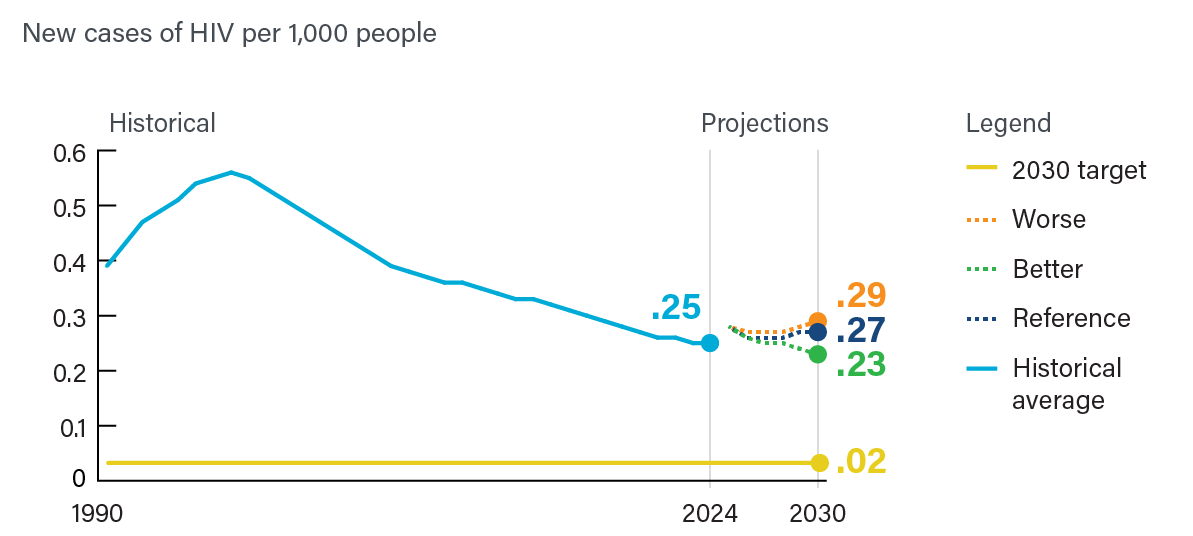
 Continued progress is possible, not inevitable
 Key missing tools
To end HIV, we need new prevention, diagnostic, and treatment tools, including:
- Expanded HIV treatment and PrEP options to meet diverse needs, improve adherence, and safeguard long-term effectiveness, including:
- Additional long-acting options, fixed-dose combinations, and/or simplified regimens with fewer side effects to improve adherence.
- Additional microbicide options to prevent infections among women and gay men and other men who have sex with men, populations disproportionately impacted by the pandemic.
- On-demand PreP solutions that can be initiated at the time of sex.
- Expanded, child-appropriate therapies that are safe, palatable, and easy to administer for infants and young children.
- Novel treatment options to address drug resistance to existing regimens.
- Additional multipurpose prevention technologies that simultaneously prevent HIV, other sexually transmitted infections, and unintended pregnancy.
- Vaccines to prevent and reduce new infections.
- Enhanced point-of-care tools to rapidly diagnose HIV in newborns to enable earlier treatment initiation and reduce infant mortality, as well as point-of-care viral load testing solutions that can enable earlier and decentralized treatment monitoring.
- A cure to control infection or eliminate it from the body.
 Breakthroughs on the brink
- Long-acting biomedical products that could revolutionize both HIV treatment and prevention in hard-to-reach populations by reducing frequency of use and providing a more discreet, convenient alternative to daily pills. Products now in development include a once-weekly ARV pill for treatment, a monthly oral PrEP pill, a three-month vaginal ring for prevention, a once-yearly injectable preventative drug, and implants that slowly release anti-HIV drugs over time for continuous protection.
- Multipurpose prevention products-including pills, injections, films, and vaginal rings that combine HIV protection with contraception-could provide more convenient options, particularly for women. The two products furthest in development are a dual prevention pill and a multipurpose vaginal ring, both of which were advanced with USAID and NIH support.
- On-demand prevention options that can be initiated at the time of sex, including a fast-dissolving vaginal insert, advanced with USAID support, that releases ARVs at the site of exposure, which could provide women with a discreet, easy-to-use prevention solution that requires no long-term commitment.
- Many clinical trials are underway to test broadly neutralizing antibodies (bNAbs)-proteins shown to neutralize many different genetic variants of HIV-as treatment and prevention products delivered via infusion or injection. These include trials of several bNAbs developed or isolated at NIH labs, as well as a combination treatment expected to enter Phase 3 trials soon, the most advanced bNAbs-based treatment to date.
- Several mRNA-based HIV vaccine candidates have advanced into first-in-human trials, including candidates supported by NIH, USAID, and DoW, bringing new hope to the quest for an HIV vaccine. Additionally, new vaccine research strategies are reinvigorating the field, including approaches to induce bNAbs such as germline targeting, which uses a series of stepwise shots to coax the immune system to create bNAbs, and T-cell approaches, which induce T cells that act as either killer cells to directly attack the virus or helper cells that support other B cells to generate antibodies against HIV.
- Several child-focused HIV technologies in development aim to close gaps in prevention and treatment early in life, including an NIH-supported trial of an experimental HIV vaccine for infants, as well as a trial to establish dosing recommendations for a child-friendly formulation of the drug dolutegravir for infants under one month old, a group for which no approved or guideline-recommended formulations exist.
- Point-of-care HIV viral load testing technologies now in development could shift treatment monitoring out of centralized laboratories and into clinics and communities, enabling same-visit results and improving care retention. Several promising platforms are being advanced with NIH support, including through its RADx program.
- Ten patients appear to have been effectively cured of HIV or are in long-term remission, demonstrating that a cure for HIV infection, while difficult, is scientifically possible. Several cure strategies are also advancing in the research pipeline, including a "kick and kill" approach to prompt latent HIV to reactivate so it can be targeted and neutralized and gene modification approaches to change human DNA in immune cells to produce cells that are resistant to HIV.
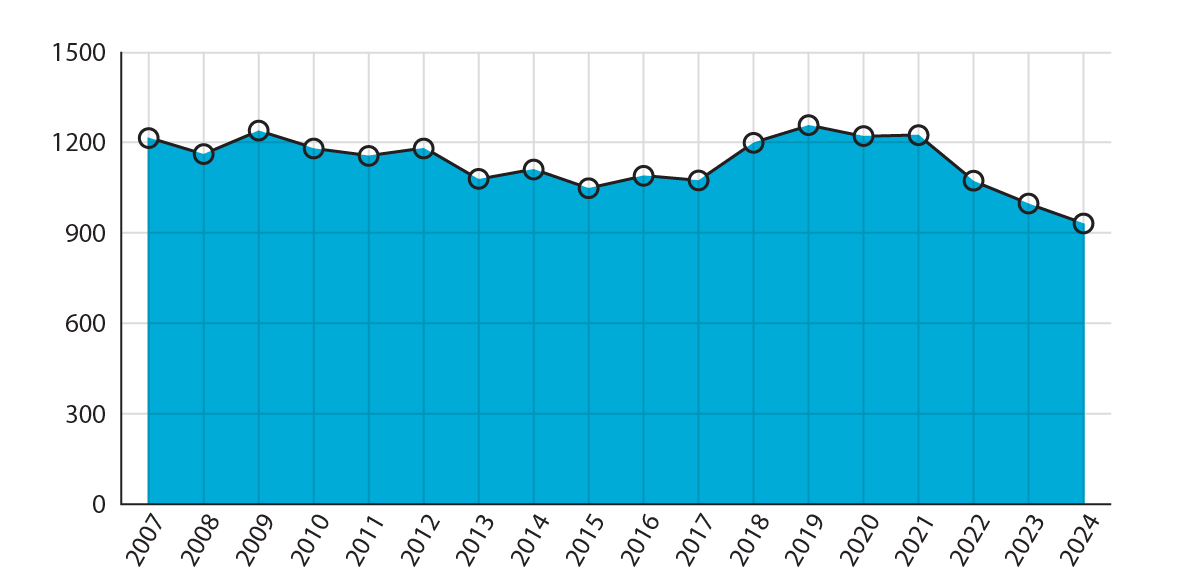
US government investment in HIV R&D for low-resource settings, 2024 US$ millions
 US government R&D efforts
The US government is leading efforts to advance research and development (R&D) to end HIV as a public health threat through a whole-of-government approach:
- National Institutes of Health (NIH) conducts basic and clinical research to advance products to prevent, diagnose, and treat HIV, as well as social behavioral research to improve the uptake and continued use of existing interventions.
- Department of State supports the introduction, delivery, and scale-up of HIV products and services globally through the President's Emergency Plan for AIDS Relief (PEPFAR) and other programming. With the integration of the US Agency for International Development (USAID), the State Department has the opportunity to support R&D efforts for HIV prevention products and multipurpose tools designed for low-resource settings, efforts previously led by USAID.
- Department of War (DoW) undertakes research to protect US service members, including vaccine research.
- Centers for Disease Control and Prevention (CDC) supports countries to strengthen surveillance, laboratory, and digital health information systems capacity, as well as generates research and evidence to scale up effective use of HIV products and services worldwide.
- Food and Drug Administration, alongside approving products for use in the United States, operates a tentative regulatory approval program to allow PEPFAR to distribute generic ARVs for use outside the United States.
Introduction
40.8 million living, 1.3 million newly infected, 44 million deaths: UNAIDS. Global HIV & AIDS statistics - Fact sheet. Accessed February 9, 2026. https://www.unaids.org/en/resources/fact-sheet
250 children: UNICEF. Global and regional trends. July 2025. Accessed February 9, 2026. https://data.unicef.org/topic/hivaids/global-regional-trends/
Research successes
ARVs, developed with NIH support: US National Institutes of Health National Institute of Allergy and Infectious Diseases. Antiretroviral drug discovery and development. Accessed February 9, 2026. https://www.niaid.nih.gov/diseases-conditions/antiretroviral-drug-development
ARVs, used to treat 36.1 million people: UNAIDS. Global HIV & AIDS statistics - fact sheet. Accessed February 9, 2026. https://www.unaids.org/en/resources/fact-sheet
ARVs, averted 16.5 million AIDS-related deaths: UNAIDS. Global roll-out of HIV treatment has saved millions of lives. September 6, 2021. Accessed February 9, 2026. https://www.unaids.org/en/resources/presscentre/featurestories/2021/september/20210906_global-roll-out-hiv-treatment
Pre-exposure prophylaxis: The Global PrEP Tracker. AVAC; 2026. Accessed February 9, 2026. https://data.prepwatch.org/
Pre-exposure prophylaxis, shown to be effective through NIH research: US National Institutes of Health National Institute of Allergy and Infectious Diseases. Pre-exposure prophylaxis (PrEP) to prevent HIV. Accessed February 9, 2026. https://www.niaid.nih.gov/diseases-conditions/pre-exposure-prophylaxis-prep
Pre-exposure prophylaxis, shown to be effective through CDC research:
Nicol MR, Adams JL, Kashuba AD. HIV PrEP trials: the road to success. Clinical Investigation. 2013; 3(3): 295-308. doi:10.4155/cli.12.155
US Centers for Disease Control and Prevention. TDF2 study of pre-exposure prophylaxis (PrEP) among heterosexual men and women in Botswana: Key facts. August 26, 2011. Accessed February 9, 2026. https://stacks.cdc.gov/view/cdc/23283
Pre-exposure prophylaxis, shown to be effective through USAID research: US Agency for International Development. PrEP. Retrieved from: https://www.usaid.gov/global-health/health-areas/hiv-and-aids/technical-areas/prep. Archived at https://web.archive.org/web/20241207024421/ https://www.usaid.gov/global-health/health-areas/hiv-and-aids/technical-areas/prep.
Approaches to prevent mother-to-child HIV transmission, developed with NIH support: NIH-sponsored study identifies superior drug regimen for preventing mother-to-child HIV transmission. Press release. US National Institutes of Health (NIH); November 17, 2014. https://www.nih.gov/news-events/news-releases/nih-sponsored-study-identifies-superior-drug-regimen-preventing-mother-child-hiv-transmission
Approaches to prevent mother-to-child HIV transmission, 62% decline in new infections in children: UNAIDS. Global HIV & AIDS statistics - fact sheet. Accessed February 9, 2026. https://www.unaids.org/en/resources/fact-sheet
Long-acting PrEP options, monthly vaginal ring: Population Council. The dapivirine vaginal ring for HIV prevention. Accessed February 9, 2026. https://popcouncil.org/project/the-dapivirine-vaginal-ring-for-hiv-prevention/
Bi-monthly injectable: PrEPWatch. Injectable cabotegravir for PreP. November 18, 2025. Accessed February 26, 2026. https://www.prepwatch.org/products/injectable-cab-for-prep/
Twice-yearly injectable: Finzi, D. Breakthrough lenacapavir trial builds on decades of NIH investment in basic science. National Institutes of Health (NIH) Office of AIDS Research. October 2024. Accessed February 9, 2026. https://oar.nih.gov/about/directors-blog/breakthrough-lenacapavir-trial-builds-decades-nih-investment-basic-science
Child-friendly therapies: Kelley, L. New HIV drug formulation could improve treatment outcomes for children worldwide. University of Colorado Anschutz. August 3, 2023. Accessed February 9, 2026. https://news.cuanschutz.edu/news-stories/new-hiv-drug-formulation-could-improve-treatment-outcomes-for-children-worldwide
Diagnostic innovations:
Unitaid, World Health Organization. Market and Technology Landscape 2020: HIV Rapid Diagnostic Tests for Self-Testing. Unitaid, World Health Organization; 2020. https://unitaid.org/assets/Unitaid-WHO-HIVST-landscape-report-2020.pdf
Unitaid, World Health Organization. HIV/AIDS Diagnostics Technology Landscape: 5th Edition. Unitaid, World Health Organization; 2015. http://www.unitaid.org/assets/UNITAID_HIV_Nov_2015_Dx_Landscape-1.pdf
Dual/multiplex tests:
World Health Organization Global Sexually Transmitted Infections Programme. Dual HIV/syphilis rapid diagnostics tests. Accessed April 15, 2026. https://www.who.int/teams/global-hiv-hepatitis-and-stis-programmes/stis/testing-diagnostics/dual-hiv-syphilis-rapid-diagnostic-tests
WHO prequalifies the first triple diagnostic test for HIV, hepatitis B and syphilis, a milestone toward global disease elimination goals. Press release. World Health Organization (WHO); July 15, 2025. https://www.who.int/news/item/15-07-2025-who-prequalifies-the-first-triple-diagnostic-test-for-hiv--hepatitis-b-and-syphilis--a-milestone-toward-global-disease-elimination-goals
WHO announces the development of guidelines on multiplex testing. Press release. World Health Organization (WHO); September 10, 2025. https://www.who.int/news/item/10-09-2025-who-announces-development-of-guidelines-on-multiplex-testing
Recency tests: Facente SN, Grebe E, Maher AD, et al. Use of HIV recency assays for HIV incidence estimation and other surveillance use cases: systematic review. JMIR Public Health and Surveillance. 2022;8(3):e34410. https://doi.org/10.2196%2F34410
Continued progress is possible, not inevitable
Gates Foundation. Goalkeepers 2025 Report. We Can't Stop at Almost. Gates Foundation; 2025. https://www.gatesfoundation.org/goalkeepers/report/2025-report/
Key missing tools
AVAC. Prevention options. Accessed February 9, 2026. https://avac.org/prevention-options/
Impact Global Health. HIV/AIDS. Accessed February 9, 2026. https://www.impactglobalhealth.org/insights/health-areas/hivaids
Breakthroughs on the brink
Long-acting biomedical products, once-weekly ARV pill: Study to compare an oral weekly islatravir/lenacapavir regimen with standard of care in virologically suppressed people with HIV-1 (ISLEND-2). ClinicalTrials.gov identifier: NCT06630299. Accessed February 9, 2026. https://www.gileadclinicaltrials.com/study?nctid=NCT06630299
Long-acting biomedical products, monthly oral PrEP pill: PrEPWatch. MK-8527. Updated February 5, 2026. Accessed February 9, 2026. https://www.prepwatch.org/products/mk-8527/
Long-acting biomedical products, three-month vaginal ring:
3-month dapivirine vaginal ring for HIV prevention demonstrates superior drug release compared to 1-month ring. Press release. Population Council; October 7, 2024. https://popcouncil.org/media/3-month-dapivirine-vaginal-ring-for-hiv-prevention-demonstrates-superior-drug-release-compared-to-1-month-ring/
PrEPWatch. The dapivirine vaginal ring. Updated February 8, 2026. Accessed February 9, 2026. https://www.prepwatch.org/products/dapivirine-vaginal-ring/
Long-acting biomedical products, once-yearly injectable prevention drug: First clinical data for Gilead's investigational once-yearly lenacapavir for HIV prevention presented at CROI 2025 and published in The Lancet. Press release. Gilead Sciences, Inc.; March 11, 2025. https://www.gilead.com/news/news-details/2025/first-clinical-data-for-gileads-investigational-once-yearly-lenacapavir-for-hiv-prevention-presented-at-croi-2025-and-published-in-the-lancet
Long-acting biomedical products, implants:
Pons-Faudoa F, Di Trani N, Facchi I, et al. Drug-agnostic transcutaneously-refillable subdermal implant for ultra-long-acting delivery of antiretrovirals for HIV prevention. Presented at: HIV Research for Prevention 2024 Conference; 2024; Lima, Peru. Abstract 2159. https://programme2024.hivr4p.org/Abstract/Abstract/?abstractid=2159
PrEPWatch. Products in Development. Accessed February 9, 2026. https://www.prepwatch.org/products-in-development/
Multipurpose prevention products, overall: AVAC. Advocates' Guide to Multipurpose Prevention Technologies. AVAC; 2021. https://avac.org/resource/advocates-guide-to-multipurpose-prevention-technologies/
Multipurpose prevention products, dual prevention pill: PrEPWatch. Dual prevention pill. Updated December 16, 2025. Accessed February 9, 2026. https://www.prepwatch.org/products/dual-prevention-pill/
Multipurpose prevention, multipurpose vaginal ring:
Population Council. The dapivirine-levonorgestrel vaginal ring for HIV prevention and contraception. Accessed February 9, 2026. https://popcouncil.org/project/the-dapivirine-levonorgestrel-vaginal-ring-for-hiv-prevention-and-contraception/
Friedland BA, Gundacker H, Achilles SL, et al. Acceptability of a dapivirine levonorgestrel vaginal ring in two Phase 1 trials (MTN-030/IPM 041 and MTN-044/IPM 053/CCN019): implications for multipurpose prevention technology development. PLoS ONE. 2025;20(1): e0312957. https://doi.org/10.1371/journal.pone.0312957
Multipurpose prevention products, USAID support: US Agency for International Development. Microbicides: New HIV prevention products for women. Retrieved from: https://www.usaid.gov/basic-page/microbicides-new-hiv-prevention-products-women-0. Archived at: https://web.archive.org/web/20241207024359/https://www.usaid.gov/basic-page/microbicides-new-hiv-prevention-products-women-0
On-demand prevention option, fast-dissolving vaginal insert: "On-demand" HIV prevention method for women being tested in second early phase trial. Press release. European AIDS Treatment Group; December 10, 2023. https://www.eatg.org/hiv-news/on-demand-hiv-prevention-method-for-women-being-tested-in-second-early-phase-trial/
Broadly neutralizing antibodies, trials with NIH support: AVAC. Broadly Neutralizing Antibody Combinations. AVAC; 2025. https://avac.org/resource/infographic/broadly-neutralizing-antibody-combinations-2/
Broadly neutralizing antibodies, combination treatment: Callaghan ML. EACS 2025: Novel HIV combo therapy of lenacapavir and 2 bNAbs found effective, well tolerated in Phase 2 trial. European AIDS Treatment Group. October 18, 2025. Accessed February 9, 2026. EACS 2025: Novel HIV combo therapy of lenacapavir and 2 bNAbs found effective, well tolerated in Phase 2 trial
mRNA-based HIV vaccine candidates: Jefferys R. Pipeline Report 2025: HIV Vaccines and Passive Immunization. Treatment Action Group; 2025. https://www.treatmentactiongroup.org/wp-content/uploads/2025/08/Pipeline_HIV_Vaccines_2025.pdf
mRNA-based HIV vaccine candidates, NIH: A clinical trial to evaluate the safety and immunogenicity of BG505 MD39.3, BG505 MD39.3 gp151, and BG505 MD39.3 gp151 CD4KO HIV trimer mRNA vaccines in healthy, HIV-uninfected adult participants. ClinicalTrials.gov identifier: NCT05217641. Accessed February 9, 2026. https://clinicaltrials.gov/study/NCT05217641#collaborators-and-investigators
mRNA-based HIV vaccine candidates, DoW: HIV vaccine in HIV-uninfected adults (RV546). ClinicalTrials.gov identifier: NCT04658667. Accessed February 9, 2026. https://clinicaltrials.gov/study/NCT04658667#collaborators-and-investigators
mRNA-based HIV vaccine candidate, USAID: Two HIV vaccine trials show proof of concept for pathway to broadly neutralizing antibodies. Press release. IAVI and Scripps Research; May 15, 2025. https://www.iavi.org/press-release/two-hiv-vaccine-trials-show-proof-of-concept-for-pathway-to-broadly-neutralizing-antibodies/
New vaccine strategies:
AVAC. Vaccines for prevention. Accessed February 9, 2026. https://avac.org/prevention-option/vaccines/
IAVI. HIV vaccines. Accessed February 9, 2026. https://www.iavi.org/our-work/hiv-vaccines/
Phase 1 clinical trial of HIV vaccine starts in Africa to evaluate immune responses to highly networked HIV T-cell epitopes. Press release. IAVI; August 4, 2025. https://www.iavi.org/press-release/phase-1-clinical-trial-of-hiv-vaccine-starts-in-africa/
US National Institutes of Health. Clinical trial of HIV vaccine begins in United States and South Africa. September 20, 2023. Accessed February 9, 2026. https://www.nih.gov/news-events/news-releases/clinical-trial-hiv-vaccine-begins-united-states-south-africa
To investigate safety, reactogenicity and immunogenicity of VIR-1388 compared with placebo in participants without HIV. ClinicalTrials.gov identifier: NCT05854381. https://clinicaltrials.gov/study/NCT05854381
Child-focused HIV technologies, experimental HIV vaccine: Weill Cornell Medicine. New NIH grant supports development of experimental pediatric HIV vaccine. News Medical. September 18, 2025. Accessed February 9, 2026. https://www.news-medical.net/news/20250918/New-NIH-grant-supports-development-of-experimental-pediatric-HIV-vaccine.aspx
Child-focused HIV technologies, child-friendly drug for infants: Cressey TR, Salvadori N, Rabie H, et al. Single doses of pediatric dolutegravir dispersible tablets in neonates support multidosing: PETITE-Dolutegravir study. Journal of Acquired Immune Deficiency Syndromes. 2025l99(2):195-201. doi:10.1097/QAI.0000000000003652
Point-of-care HIV viral load testing technologies: NIH announces awards to advance tech for HIV viral load detection. Press release. US National Institutes of Health (NIH) National institute of Biomedical Imaging and Bioengineering; December 19, 2024. https://www.nibib.nih.gov/news-events/newsroom/nih-announces-awards-advance-tech-hiv-viral-load-detection
Ten patients cured/in remission:
Cox D. Whatever happened to ... the race to cure HIV? There's promising news. NPR. August 25, 2025. Accessed February 9, 2026. https://www.npr.org/sections/goats-and-soda/2025/08/25/g-s1-84393/whatever-happened-to-the-race-to-cure-hiv-theres-promising-news
Jefferys R. Pipeline Report 2025: Research Toward a Cure and Immune-Based Therapies. Treatment Action Group; 2025. https://www.treatmentactiongroup.org/wp-content/uploads/2025/08/Pipeline_Cure_IBT_2025.pdf
US government investment in HIV R&D
G-FINDER data portal. Policy Cures Research; 2026. Accessed February 2, 2026. https://gfinderdata.policycuresresearch.org/
US government R&D efforts
KFF. US Federal Funding for HIV/AIDS: Trends Over Time. KFF; 2024. https://www.kff.org/hivaids/fact-sheet/u-s-federal-funding-for-hivaids-trends-over-time/
Michaud J, Moss K, Kates J. The US Department of Defense and Global Health. KFF; 2012. https://www.kff.org/global-health-policy/report/the-u-s-department-of-defense-global/
US Food and Drug Administration. President's Emergency Plan for AIDS Relief (PEPFAR). Updated May 15, 2022. Accessed February 9, 2026. https://www.fda.gov/international-programs/presidents-emergency-plan-aids-relief-pepfar
Chmiola M, Long A. USAID's latest global health R&D report offers glimpse of progress now at risk. Global Health Technologies Coalition. May 5, 2025. Accessed February 26, 2026. https://www.ghtcoalition.org/blog/fy-24-usaid-global-health-r-d-report-analysis
PEPFAR's support of American innovation to reach up to 2 million people by 2028 with breakthrough HIV drug lenacapavir. Press release. US Department of State; September 4, 2025. https://www.state.gov/releases/the-united-states-presidents-emergency-plan-for-aids-relief/2025/09/pepfars-support-of-american-innovation-to-reach-up-to-2-million-people-by-2028-with-breakthrough-hiv-drug-lenacapavir/
Pigott T. Advancing the America First Global Health Strategy through landmark bilateral global health MOUs with Botswana, Madagascar, Sierra Leone, and Ethiopia. Press statement. US Department of State; December 23, 2025. https://www.state.gov/releases/office-of-the-spokesperson/2025/12/advancing-the-america-first-global-health-strategy-through-landmark-bilateral-global-health-mous/
R&D for Malaria
How new tools can transform the fight
About half of the world’s population is at risk of malaria—a common but deadly disease that undermines health, productivity, and economic development. In 2024, there were an estimated 282 million cases of malaria in 80 countries and approximately 610,000 deaths, 95% of which occurred in sub-Saharan Africa, with more than 75% of those in young children. Thanks to malaria control interventions, more than 2.3 billion malaria cases and 14 million deaths were averted between 2000 and 2024. Yet, despite this progress, challenges like growing drug and insecticide resistance hinder control efforts. Unfortunately, 2024 saw a continued increase in new cases—indicating stalled progress and underscoring the urgent need for new solutions to complement existing interventions.
-
Nearly halfthe world’s population is at risk
-
282 millioncases of malaria in 2024
-
610,000deaths from malaria worldwide in 2024
Research
successes
Technologies have transformed the fight against malaria:
- Vector control tools, including insecticide-treated nets (ITNs) and indoor residual spraying, have driven dramatic declines in malaria. More recently, new dual-ingredient ITNs have helped confront rising insecticide resistance, while spatial emanators—a new vector control category that releases active airborne ingredients—offer complementary indoor protection.
- Medicines for treatment and prevention have drastically improved survival, helping avert 1.5 billion cases over the past two decades. More recent innovations include Coartem® Dispersible, the most widely used medicine for children; injectable artesunate for severe malaria; tafenoquine for relapsing Plasmodium vivax malaria; Coartem® Baby, the first-ever medicine for newborns and young infants; the first-ever pediatric formulations of primaquine for relapsing malaria; and the scale-up of chemoprevention approaches that deliver preventive antimalaria medicines during periods of high risk.
- Two malaria vaccines have been recommended for widespread use since 2021 to reduce illness and deaths in children, with 25 countries now offering malaria vaccination through routine childhood immunization programs.
- Diagnostic innovations have transformed malaria detection and care, with rapid diagnostic tests (RDTs), widely introduced in the late 2000s, expanding access to confirmatory testing before treatment and reducing antimalarial overuse. Newer, more sensitive RDTs can detect parasite mutations that evade earlier tests, while molecular methods and digital tools are improving surveillance and detection accuracy.
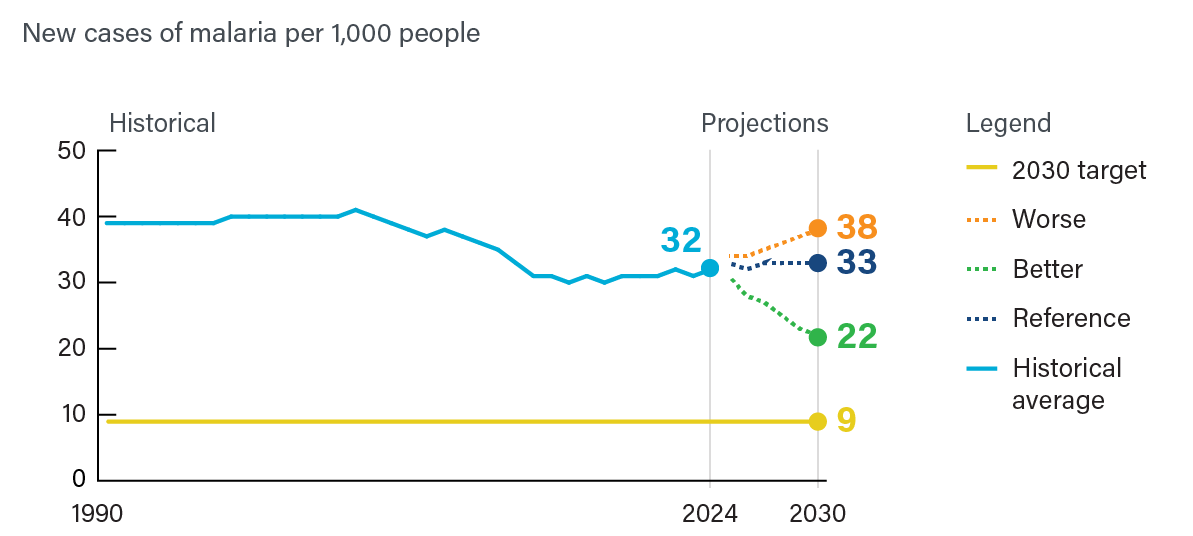
Continued progress is possible, not inevitable
Key missing tools
To end malaria, we need new prevention and treatment tools including:
- New vector control tools, including novel and longer-lasting insecticides to address resistance and biological control methods to reduce mosquito populations.
- New treatments and approaches to stem drug resistance, including artemisinin alternatives, novel regimens, easier-to-administer options such as single-dose cures, and innovative delivery approaches to reduce pressure on existing treatments.
- Novel drugs to block transmission and prevent reinfection, as well as to treat severe malaria; endectocides to kill the mosquito vector; and additional antimalarials approved for vulnerable populations, including children, those suffering from malnutrition or co-infection with other pathogens, and pregnant individuals, especially those in their first trimester.
- Novel, single-dose preventative therapies, such as monoclonal antibodies and long-acting injectables, that can complement other prevention tools like bednets, vaccines, and malaria chemoprevention.
- Improved rapid diagnostic tests for low-resource settings that can detect all stages and species of malaria equally well for early, accurate diagnosis and effective surveillance, as well as tests that can distinguish malaria from other similar illnesses and detect asymptomatic cases.
- Next-generation malaria vaccines with longer duration, increased efficacy, and simpler implementation, including vaccines that block human-to-mosquito transmission of the parasite for use in elimination campaigns.
Breakthroughs on the brink
- Four promising monoclonal antibodies for malaria are undergoing clinical testing in Africa, including two supported by NIH. Three of these—CIS43LS, L9LS, and MAM01—are intended to provide seasonal protection against infection, similar to a vaccine, while TB31F prevents onward transmission by blocking parasite development in mosquitoes.
- Several long-acting injectable malaria prevention drugs are in development, including one candidate now being tested in a first-in-human trial.
- Dozens of malaria vaccine candidates are in clinical development, including multi-antigen, multi-stage vaccines that aim to build on the success of current vaccines and several candidates currently or previously supported by NIH, DoW, and USAID.
- An affordable, AI-powered microscope that quickly diagnoses malaria in blood samples, supported by NIH, could help improve access to early, accurate diagnosis in resource-limited settings.
- New malaria treatment combinations with the potential to combat drug-resistant malaria, including gananplacide/lumefantrine, a novel drug that showed positive Phase 3 results in 2025, and triple artemisinin-based combination therapies, including the first fixed-dose triple-drug combination to reach Phase 3 clinical development.
- A historic Phase 3 trial is testing the safety and efficacy of antimalarial drugs for women in their first trimester of pregnancy, a high-risk group long excluded from clinical research, leaving them without an adequate treatment option.
- Gene drive approaches that genetically modify mosquitoes to suppress population growth or block malaria transmission, which have shown strong proof-of-concept in laboratory studies and are moving toward carefully controlled field evaluations, representing a potentially transformative new vector control strategy.
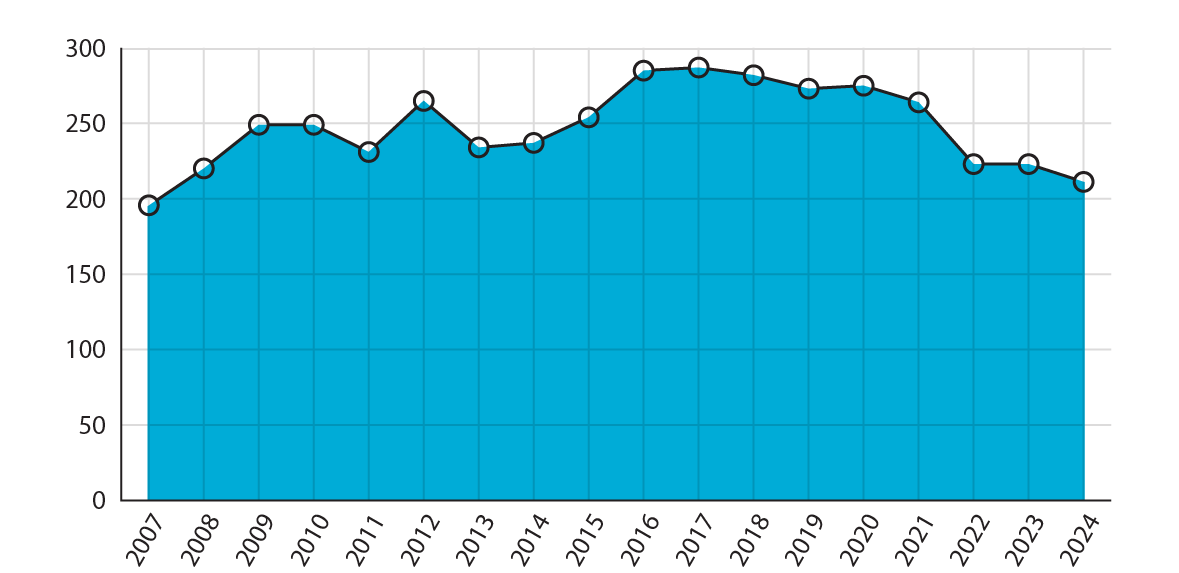
US government investment in malaria R&D (in 2018) US$ millions
US government R&D efforts
The US government is leading efforts to advance research and development (R&D) to combat malaria through a whole-of-government approach:
- National Institutes of Health (NIH) conducts basic and clinical research for new treatments, vaccines, diagnostics, and vector control products.
- Department of War (DoW) undertakes research to protect US service members against malaria—the leading infectious disease threat to US service members abroad—including drug, vaccine, and vector control research.
- Department of State supports the delivery and scale-up of malaria products and services globally. Following the integration of the US Agency for International Development (USAID), the State Department has the opportunity to support R&D efforts for new vaccines, antimalarials, and vector control products for low-resource settings, efforts previously led by USAID.
- Centers for Disease Control and Prevention (CDC) conducts surveillance and monitoring research and develops and evaluates malaria control interventions such as bednets and other tools to improve public health efforts. It has historically implemented global malaria activities with USAID, but the future of the State Department and CDC’s collaboration on malaria remains unclear.
- Food and Drug Administration, alongside approving products for use in the United States, administers the Tropical Disease Priority Review Voucher Program to incentivize investment in products for neglected diseases, including malaria.
Introduction
282 million cases, 610,000 deaths: World Health Organization. Malaria. December 4, 2025. Accessed February 10, 2026. https://www.who.int/news-room/fact-sheets/detail/malaria
Nearly half the world's population at risk: US Centers for Disease Control and Prevention. Malaria's impact worldwide. April 1, 2024. Accessed February 10, 2026. https://www.cdc.gov/malaria/php/impact/index.html
More than 70% young children: Impact Global Health. Malaria. Accessed February 10, 2026. https://www.impactglobalhealth.org/insights/health-areas/malaria
2.3 billion cases and 14 million deaths averted; continued increase in cases: World Health Organization. World Malaria Report 2025. World Health Organization; 2025. https://www.who.int/teams/global-malaria-programme/reports/world-malaria-report-2025
Research Successes
Vector-control tools, driven dramatic declines in malaria: Bhatt S, Weiss DJ, Cameron E, et al. The effect of malaria control on Plasmodium falciparum in Africa between 2000 and 2015. Nature. 2015;526:207–211. https://doi.org/10.1038/nature15535
Vector-control tools, expanded global rollout: World Health Organization. Expanded use of new dual-insecticide nets offers hope for malaria control efforts in Africa. World Health Organization. April 24, 2025. Accessed February 10, 2026. https://www.who.int/news-room/feature-stories/detail/expanded-use-of-new-dual-insecticide-nets-offers-hope-for-malaria-control-efforts-in-africa
Spatial emanators:
Kupferschmidt K. New vapor tool fights mosquitoes by slowly releasing insecticide in homes. Will it catch on? Science. November 24, 2025. Accessed February 10, 2026. https://www.science.org/content/article/new-vapor-tool-fights-mosquitoes-slowly-releasing-insecticide-homes-will-it-catch
Colliver V. How a malaria-fighting breakthrough provides lasting protection. University of California San Francisco. August 26, 2025. Accessed February 27, 2026. https://www.ucsf.edu/news/2025/08/430586/how-malaria-fighting-breakthrough-provides-lasting-protection
Allan RJ, Scherrer R, Estecha-Querol S, et al. The effectiveness of long-lasting spatial repellent emanators against malaria in humanitarian crisis settings in northern Nigeria: a two-arm pragmatic, open-label, controlled trial. Lancet Infectious Diseases. 2026. doi:10.1016/S1473-3099(25)00684-X.
Medicines for treatment and prevention: Medicines for Malaria Venture. History of antimalarial drugs. Accessed July 17, 2024. https://www.mmv.org/malaria-medicines/history-antimalarials-drugs
Medicines for treatment and prevention, 1.5 billion cases averted: World Health Organization. World Malaria Report 2020. World Health Organization; 2020. https://www.who.int/teams/global-malaria-programme/reports/world-malaria-report-2020
Medicines for treatment and prevention, Coartem® Dispersible: First quality-approved malaria treatment for children reaches landmark 500 million treatments delivered. Press release. Medicines for Malaria Venture; April 25, 2025. https://www.mmv.org/newsroom/news-resources-search/first-quality-approved-malaria-treatment-children-reaches-landmark
Medicines for treatment and prevention, artesunate:
Medicines for Malaria Venture. Artesunate for injection, Larinate® 60 mg for injection. Accessed February 10, 2026. https://www.mmv.org/mmv-pipeline-antimalarial-drugs/artesunate-injection
Medicines for Malaria Venture. Artesunate for injection, Artesun®. Accessed February 10, 2026. https://www.mmv.org/mmv-pipeline-antimalarial-drugs/artesunate-injection-0
Medicines for treatment and prevention, tafenoquine:
US FDA approves Krintafel (tafenoquine) for the radical cure of P. vivax malaria. Press release. GSK; July 20, 2018. https://www.gsk.com/en-gb/media/press-releases/us-fda-approves-krintafel-tafenoquine-for-the-radical-cure-of-p-vivax-malaria/
Single-dose Kozenis (tafenoquine) approved for children with Plasmodium vivax malaria by Australian Therapeutic Goods Administration. Press release. Medicines for Malaria Venture; March 14, 2022. https://www.mmv.org/newsroom/news-resources-search/single-dose-kozenis-tafenoquine-approved-children-plasmodium-vivax
Medicines for Malaria Venture. Tafenoquine. Accessed February 10, 2026. https://www.mmv.org/mmv-pipeline-antimalarial-drugs/tafenoquine
Medicines for treatment and prevention, Coartem® Baby: Novartis receives approval for first malaria medicine for newborn babies and young infants. Press release. Novartis; July 8, 2025. https://www.novartis.com/news/media-releases/novartis-receives-approval-first-malaria-medicine-newborn-babies-and-young-infants
Medicines for treatment and prevention, pediatric formulations of primaquine: WHO approves first child-friendly formulations for treating relapsing malaria. Press release. Medicines for Malaria Venture; November 19, 2025. https://www.mmv.org/newsroom/news-resources-search/who-approves-first-child-friendly-formulations-treating-relapsing
Medicines for treatment and prevention, scale-up of chemoprevention approaches:
SMC Alliance. From Concept to Scale: Celebrating 10 Years of Seasonal Malaria Chemoprevention. SMC Alliance; 2023. https://www.smc-alliance.org/resources/from-concept-to-scale-celebrating-10-years-of-seasonal-malaria-chemoprevention
Medicines for Malaria Venture. Optimizing seasonal malaria chemoprevention (SMC) implementation. Accessed February 10, 2026. https://www.mmv.org/our-work/access-medicines/seasonal-malaria-chemoprevention
Two approved malaria vaccines: World Health Organization. Malaria vaccines (RTS,S and R21). February 4, 2026. Accessed February 10, 2026. https://www.who.int/news-room/questions-and-answers/item/q-a-on-rts-s-malaria-vaccine
Diagnostics innovations: Kavanaugh MJ, Azzam SE, Rockabrand DM. Malaria rapid diagnostic tests: literary review and recommendation for a quality assurance, quality control algorithm. Diagnostics. 2021;11(5):768. doi:10.3390/diagnostics11050768
Continued Progress Is Possible, Not Inevitable
Gates Foundation. Goalkeepers 2025 Report. We can't stop at almost. Gates Foundation; 2025. https://www.gatesfoundation.org/goalkeepers/report/2025-report/
Key Missing Tools
World Health Organization. World Malaria Report 2025. World Health Organization; 2025. https://www.who.int/teams/global-malaria-programme/reports/world-malaria-report-2025
Medicines for Malaria Venture. Target product profiles & target candidate profiles. Accessed February 10, 2026. https://www.mmv.org/research-development/information-scientists/target-product-profiles-target-candidate-profiles
Impact Global Health. Malaria. Accessed February 10, 2026. https://www.impactglobalhealth.org/insights/health-areas/malaria
Based on consultation with topic area experts from GHTC member organizations.
Breakthrough on the Brink
Monoclonal antibodies:
Mundel T. The quest for transformative tools to eradicate malaria. The New England Journal of Medicine. 2024;390(17):1620–1621. doi:10.1056/NEJMe2402430
Global Health Technologies Coalition, Policy Cures Research. Doing Well by Doing Good: Why Investing in Global Health R&D Benefits the United States and the World. Global Health Technologies Coalition; 2024. https://www.ghtcoalition.org/resources-item/doing-well-by-doing-good-why-investing-in-global-health-r-d-benefits-the-united-states-and-the-world
Long-acting injectable malaria prevention drug trial: Long-acting injectable malaria drug enters first-in-human study. Press release. Scripps Research Calibr-Skaggs Institute for Innovative Medicines and Medicines for Malaria Venture; January 23, 2025. https://www.scripps.edu/news-and-events/press-room/2025/20250123-calibr-lai.html
Malaria vaccine candidates, DoW & NIH: Infectious Disease R&D Tracker. Impact Global Health; 2025. Accessed February 10, 2026. https://www.impactglobalhealth.org/data/infectious-disease
Malaria vaccine candidates, USAID: Lay K. Trump aid spending freeze halts leading malaria vaccine programme. The Guardian. February 2, 2025. Accessed February 27, 2026. https://www.theguardian.com/global-development/2025/feb/02/trump-aid-spending-freeze-halts-leading-mvdp-malaria-vaccine-programme
AI-powered microscope:
Kubota T. Affordable microscope speeds up malaria diagnosis with AI. MedicalXpress. February 10, 2026. Accessed February 10, 2026. https://medicalxpress.com/news/2026-02-microscope-malaria-diagnosis-ai.html
Li H, Lin H, Shrestha P, et al. Octopi 2.0: open and scalable microscopy platform for AI-powered diagnostic applications. medRxiv. 2025. https://doi.org/10.1101/2025.03.21.25324364
New malaria treatment combinations, ganaplacide/lumefantrine-SDF: Phase 3 trial for next-generation malaria treatment GanLum meets primary endpoint, with potential to combat antimalarial resistance. Press release. Medicines for Malaria Venture; November 12, 2025. https://www.mmv.org/newsroom/news-resources-search/phase-3-trial-next-generation-malaria-treatment-ganaplacide-lumefantrine
New malaria treatment combinations, triple ACT in Phase 3 trial: Centre for Tropical Medicine and Global Health. FD-TACT malaria treatment trial launches patient recruitment in Rwanda. October 8, 2025. Accessed April 14, 2026. https://www.tropicalmedicine.ox.ac.uk/news/fd-tact-malaria-treatment-trial-launches-patient-recruitment-in-rwanda
Antimalarial drugs for women in their first trimester: First patient enrolled in historic Phase 3 clinical trial to treat malaria in first-trimester pregnancy. Press release. Medicines for Malaria Venture; October 6, 2025. https://www.mmv.org/SAFIREtrial
Simpler dosing treatment regimens:
Medicines for Malaria Venture. MMV533. Accessed February 10, 2026. https://www.mmv.org/mmv-pipeline-antimalarial-drugs/mmv533
Medicines for Malaria Venture. MMV183. Accessed February 10, 2026. https://www.mmv.org/mmv-pipeline-antimalarial-drugs/mmv183
US government investment in malaria R&D
G-FINDER data portal. Policy Cures Research; 2026. Accessed February 10, 2026. https://gfinderdata.policycuresresearch.org/
US government R&D efforts
DoW: KFF. The US Department of Defense & Global Health. KFF; 2012. https://www.kff.org/global-health-policy/report/the-u-s-department-of-defense-global/
FDA: US Food and Drug Administration. Tropical Disease Priority Review Voucher Program. Updated June 13, 2024. Accessed July 22, 2024. https://www.fda.gov/about-fda/center-drug-evaluation-and-research-cder/tropical-disease-priority-review-voucher-program
State: KFF. The Trump Administration's foreign aid review: Status of the President's Malaria Initiative (PMI). KFF. October 16, 2025. Accessed February 10, 2026. https://www.kff.org/global-health-policy/the-trump-administrations-foreign-aid-review-status-of-the-presidents-malaria-initiative-pmi/
R&D for Tuberculosis
How new tools can transform the fight
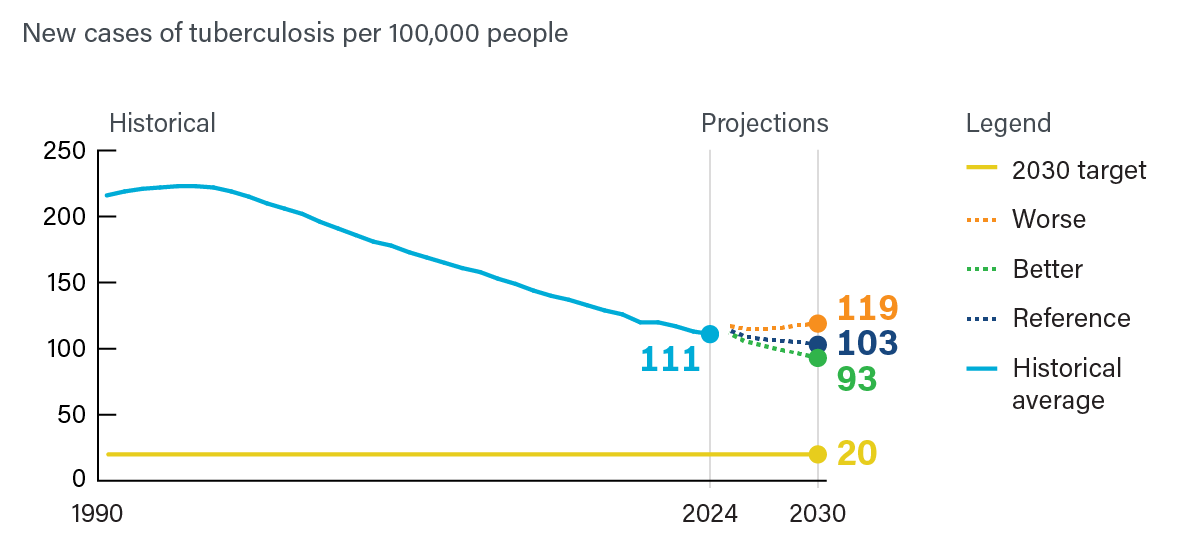
Tuberculosis (TB) has burdened humanity for thousands of years. Today, it is the world’s leading infectious disease killer: 10.7 million people fell ill from TB and 1.23 million died in 2024 alone. Additionally, growing resistance to available drugs is making the disease more deadly and difficult to treat.
To end the epidemic, new technologies to prevent, treat, and diagnose TB are urgently needed, including a new vaccine with better protective efficacy, shorter and safer treatment regimens, and improved diagnostics that can detect drug resistance designed specifically for underserved populations and low-resource settings.
-
1.23 millionpeople died from TB in 2024
-
390,000 peopledeveloped MDR-TB in 2024
-
$16.7 trillioncost of MDR-TB to global economy by 2050
Research
successes
Technologies have transformed the fight against TB:
- Bedaquiline, a drug for multidrug-resistant TB (MDR-TB) developed with NIH and USAID support, which has become the cornerstone of modern, all-oral MDR-TB regimens, was approved by the FDA in 2012. A pediatric version followed in 2020. In recent years, the World Health Organization (WHO) has recommended additional bedaquiline-based regimens that have shortened MDR-TB treatment from up to two years, when the drug was first introduced, to six to nine months today.
- The first child-friendly TB medicines, developed with USAID support, were introduced in 2016. They are appropriately dosed, dissolvable, and fruit flavored.
- Pretomanid, a drug for highly drug-resistant TB (DR-TB), developed with USAID and NIH support, was approved by FDA in 2019. Pretomanid-based regimens have dramatically improved DR-TB treatment outcomes and reduced treatment times from up to two years to six months.
- A shorter, four-month treatment regimen for drug-susceptible TB, developed with CDC and NIH support, was endorsed by WHO in 2022, marking the first major advancement in drug-susceptible treatment in nearly 50 years.
- 3HP and 1HP, short-course preventative regimens to stop latent TB from becoming active, developed with CDC and NIH support, were introduced in 2011 and 2018, respectively, making treatment more tolerable and shorter (one to three months versus six).
- Rapid confirmatory TB diagnostics, including automated molecular tests suitable for lower-level laboratories, such as Xpert and Truenat, and the first recommended near point-of-care molecular test, Pluslife Mindock MTB, which can be used in primary and community-based health care settings.
- Advances in TB screening, such as AI-powered computer-aided detection software to analyze chest X-rays and cough apps that use AI to analyze cough audio recordings.
Continued progress is possible, not inevitable
Key missing tools
To end TB, we need new tools to detect, prevent, and treat infection, including:
- Shorter, safer, simpler, and more affordable treatment regimens with fewer side effects for active and drug-resistant TB that include both novel drugs and next-generation versions of existing drugs to improve tolerability, acceptability, adherence, and treatment outcomes and address rising drug resistance.
- Specifically dosed and formulated treatment regimens for pregnant people and children, as well as people living with HIV coinfection.
- New vaccines for prevention and treatment that are scalable, cost-effective, safe for pregnant people, and protect across ages. The current vaccine, developed in 1921, is effective at preventing some types of TB in infants, but it offers inconsistent protection in adults against pulmonary TB.
- Rapid, non-sputum-based, affordable point-of-care screening and diagnostic tools and quick, simplified drug susceptibility tests, which are suitable for use in low-resource settings and primary health care facilities. Diagnostics validated specifically for children, who are often considered only later on in research, should also be prioritized.
- New tools to monitor treatment for individuals at risk of poor treatment outcomes before, during, and after treatment to ensure treatment retention, assess response, and identify those at risk of TB relapse.
Breakthroughs on the brink
- Twenty-two new or repurposed drugs for TB are in clinical development, including the first of a novel class of drugs to approach Phase 3 development. Ongoing research will determine how to optimally combine this next generation of new drugs to further shorten the duration and improve the efficacy and safety of TB treatment regimens while preserving the longevity of new agents and drug classes against the development of drug resistance. AI is also accelerating the discovery of new TB drug targets.
- New treatment regimens for children, including a regimen for drug-susceptible TB that could reduce treatment time from up to six months to two, which is now in Phase 3 trials supported formerly by USAID and now the State Department. NIH is also supporting early-stage clinical studies on pretomanid use in children to increase the availability of pretomanid-containing regimens for children.
- More shortened treatment regimens for TB and DR-TB composed of existing drugs are also in the pipeline, including a Phase 3 trial testing six different treatment approaches for patients with bacteriologically unconfirmed TB, or patients who have chest ray abnormalities that look like TB but cannot be confirmed with traditional sputum tests, who have no clear treatment option.
- There are 17 potential preventative and therapeutic TB vaccines in development, including a vaccine candidate, M72/AS01E, currently in Phase 3 trials, that shows promise in preventing pulmonary TB in adolescents and adults and, if proven successful, could become the first new TB vaccine in more than 100 years. Another promising vaccine MTBVAC is in Phase 2/3 development for infants, adolescents, adults, and people living with HIV.
- New approaches and strategies for TB vaccine research are invigorating the field, including research on new routes of administration, such as using inhaled, aerosolized TB vaccines and mRNA technology, as well as new models for vaccine testing, including a controlled human infection model.
- New, innovative methods to administer treatment, such as microarray patches and long-acting formulations and injectable agents, may lower the cost and burden of treatment by reducing the frequency and number of treatments that patients need. Nanomedicine is another area that could have the potential to reduce drug doses and side effects, improving treatment compliance, with one NIH-backed inhalable option in development.
- More portable and affordable near point-of-care ultrasounds, AI-powered digital stethoscopes, and biomarker-based tests are emerging as growing classes of TB screening and diagnostic tools, along with less-expensive, next-generation urine- and swab-based molecular tests, all of which could bring care closer to patients and improve diagnostics access for underserved populations.
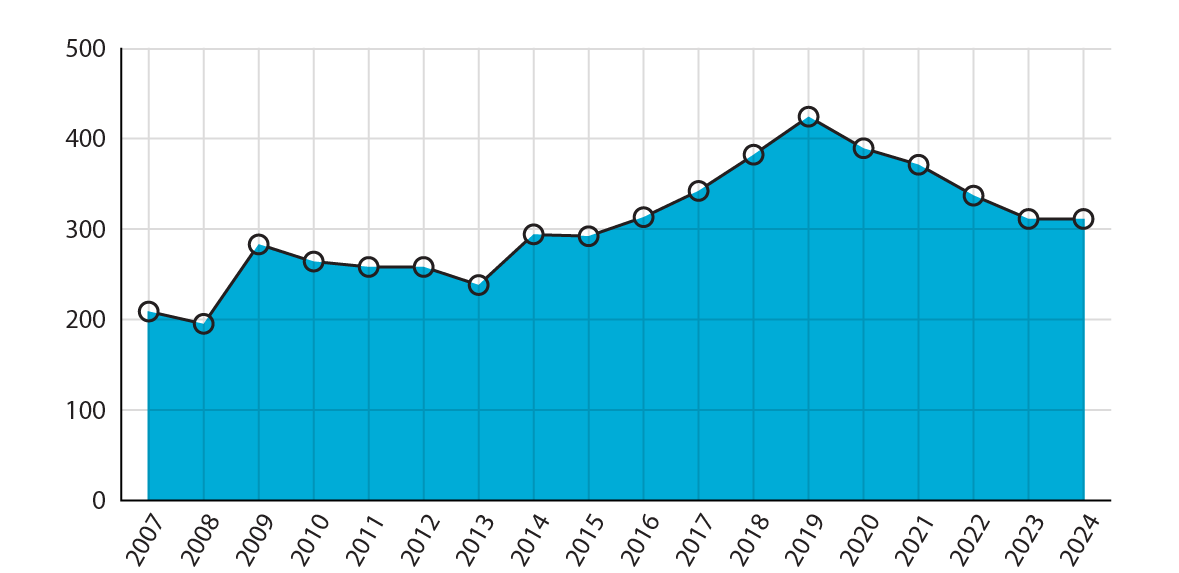
US government investment in TB R&D, 2024 US$ millions
US government R&D efforts
The US government is leading efforts to advance research and development (R&D) to end the TB pandemic through a whole-of-government approach:
- National Institutes of Health (NIH) conducts basic and clinical research to accelerate the development of new tools to diagnose, prevent, and treat TB.
- Department of State supports the delivery and scale-up of TB products and services globally and is continuing select TB drug and diagnostic development efforts formerly led by the US Agency for International Development (USAID) following the agency's integration.
- Centers for Disease Control and Prevention (CDC) supports clinical and epidemiological research for TB through national and international partnerships, such as the TB Trials Consortium, which has supported the development and implementation of new TB technologies and significantly improved global TB treatment and prevention guidelines.
- Department of War has funded research on TB vaccines, drugs, and diagnostics through the Congressionally Directed Medical Research Programs (CDMRP) and other contracts, but to enable the former, TB must be added annually to the CDMRP list of eligible diseases.
- Food and Drug Administration (FDA), alongside approving products for use in the United States, administers the Tropical Disease Priority Review Voucher Program to incentivize investment in products for neglected diseases, including TB, and implements an expedited approval pathway for antibiotics that can apply to DR-TB products.
Introduction
10.7 million new infections, 1.23 million people died: World Health Organization. Tuberculosis. November 13, 2025. Accessed February 19, 2026. https://www.who.int/news-room/fact-sheets/detail/tuberculosis
390,000 people developed MDR-TB: World Health Organization. Global Tuberculosis Report 2025. World Health Organization; 2025. https://www.who.int/teams/global-programme-on-tuberculosis-and-lung-health/tb-reports/global-tuberculosis-report-2025
$16.7 trillion cost of MDR-TB: Zweynert A. Drug-resistant TB threatens to kill 75 million people by 2050, cost $16.7 trillion. Reuters. March 23, 2015. Accessed February 19, 2026. https://www.reuters.com/article/us-health-tuberculosis-economy/drug-resistant-tb-threatens-to-kill-75-million-people-by-2050-cost-16-7-trillion-idUSKBN0MK00520150324/
Research successes
Bedaquiline: Thomas K. FDA approves drug for resistant tuberculosis. The New York Times. December 31, 2012. Accessed February 19, 2026. https://www.nytimes.com/2013/01/01/business/fda-approves-new-tuberculosis-drug.html
Bedaquiline, pediatric version: US FDA approves new pediatric formulation of SIRTURO® (bedaquiline) as part of combination therapy to treat children with pulmonary multidrug-resistant tuberculosis. Press release. Johnson & Johnson; May 27, 2020. https://www.jnj.com/media-center/press-releases/u-s-fda-approves-new-pediatric-formulation-of-sirturoo-bedaquiline-as-part-of-combination-therapy-to-treat-children-with-pulmonary-multidrug-resistant-tuberculosis
Additional shortened regimens: Cullinan K. WHO recommends three shorter, oral treatments for drug-resistant TB. Health Policy Watch. August 22, 2024. Accessed February 19, 2026. https://healthpolicy-watch.news/who-recommends-three-shorter-oral-treatments-for-drug-resistant-tb/
Child-friendly TB medicines: TB Alliance. Child-friendly medicines. Accessed February 19, 2026. https://www.tballiance.org/child-friendly-medicines
Pretomanid: TB Alliance. Pretomanid and the BPaL regimen. Accessed February 19, 2026. https://www.tballiance.org/pretomanid-bpal-regimen/
Shorter, four-month treatment regimen:
Mckenna L. Pipeline Report 2023: Tuberculosis Treatment. Treatment Action Group; 2023. https://www.treatmentactiongroup.org/wp-content/uploads/2024/03/pipeline_TB_Treatment_2023_final.pdf
World Health Organization. Major improvements in quality of life for people with drug-susceptible TB expected following updates in TB treatment regimens. World Health Organization. May 24, 2022. Accessed February 19, 2026. https://www.who.int/news/item/24-05-2022-major-improvements-in-quality-of-life-for-people-with-drug-susceptible-tb-expected-following--updates-in-tb-treatment-regimens
3HP and 1HP, short-course preventative regimens: Mckenna L. Pipeline Report 2023: Tuberculosis Treatment. Treatment Action Group; 2023. https://www.treatmentactiongroup.org/wp-content/uploads/2024/03/pipeline_TB_Treatment_2023_final.pdf
Diagnostic innovations: Vachaspath TD. Pipeline Report 2025: Tuberculosis Diagnostics. Treatment Action Group; 2025. https://www.treatmentactiongroup.org/wp-content/uploads/2025/11/2025_pipeline_TB_Diagnostics_final.pdf
Diagnostic innovations, near point-of-care molecular test recommendation: World Health Organization (WHO). WHO recommends near point-of-care tests, tongue swabs, and sputum pooling for TB diagnosis. World Health Organization. March 9, 2026. Accessed February 19, 2026. https://www.who.int/news/item/09-03-2026-who-recommends-near-point-of-care-tests--tongue-swabs--and-sputum-pooling-for-tb-diagnosis
Advances in TB screening: Vachaspath TD. Pipeline Report 2025: Tuberculosis Diagnostics. Treatment Action Group; 2025. https://www.treatmentactiongroup.org/wp-content/uploads/2025/11/2025_pipeline_TB_Diagnostics_final.pdf
Advances in TB screening, computer-aided TB diagnostic software products: World Health Organization (WHO). WHO approves six software products for computer-aided detection of TB on chest X-ray. World Health Organization. June 11, 2025. Accessed February 19, 2026. https://www.who.int/news/item/11-06-2025-who-approves-six-software-products-for-computer-aided-detection-of-tb-on-chest-x-ray
Continued progress is possible, not inevitable
Gates Foundation. Goalkeepers 2025 Report. We can't stop at almost. Gates Foundation; 2025. https://www.gatesfoundation.org/goalkeepers/report/2025-report/
Key missing tools
World Health Organization. Global Tuberculosis Report 2025. World Health Organization; 2025. https://www.who.int/teams/global-programme-on-tuberculosis-and-lung-health/tb-reports/global-tuberculosis-report-2025
Treatment regimens:
TB Alliance. Scientific vision. Accessed February 19, 2026. https://www.tballiance.org/rd-scientific-vision/
TB Alliance. Inadequate treatment. Accessed February 19, 2026. https://www.tballiance.org/why-new-tb-drugs-inadequate-treatment/
Diagnostics:
Vachaspath TD. Pipeline Report 2025: Tuberculosis Diagnostics. Treatment Action Group; 2025. https://www.treatmentactiongroup.org/wp-content/uploads/2025/11/2025_pipeline_TB_Diagnostics_final.pdf
World Health Organization. Target Product Profile for Tuberculosis Diagnosis and Detection of Drug Resistance. World Health Organization; 2024. https://www.who.int/publications/i/item/9789240097698
Treatment monitoring:
Vachaspath TD. Pipeline Report 2025: Tuberculosis Diagnostics. Treatment Action Group; 2025. https://www.treatmentactiongroup.org/wp-content/uploads/2025/11/2025_pipeline_TB_Diagnostics_final.pdf
Breakthrough on the brink
New or repurposed drugs: McKenna L. Pipeline Report 2025: Tuberculosis Treatment. Treatment Action Group; 2025. https://www.treatmentactiongroup.org/wp-content/uploads/2025/08/pipeline_TB_Treatment_2025_final.pdf
New or repurposed drugs, AI drug discovery: Aguilera M. AI accelerates search for new tuberculosis drug targets. MedicalXpress. February 6, 2026. Accessed February 19, 2026. https://medicalxpress.com/news/2025-02-ai-tuberculosis-drug.html
TB treatment regimens for children: McKenna L. Pipeline Report 2025: Tuberculosis Treatment. Treatment Action Group; 2025. https://www.treatmentactiongroup.org/wp-content/uploads/2025/08/pipeline_TB_Treatment_2025_final.pdf
TB treatment regimens for children, regimen for drug-susceptible TB: SMART4TB Consortium. SMILE-TB Trial: Shortened Regimen for Drug-Susceptible TB in Children. SMART4TB Consortium; 2025. https://tbcenter.jhu.edu/wp-content/uploads/2025/12/SMILE-TB-Study.pdf
TB treatment regimens for children, pretomanid: Promising new data on pediatric use of pretomanid in children with drug-resistant tuberculosis presented at 2025 Union Conference. Press Release. TB Alliance; November 19, 2025. https://www.tballiance.org/promising-new-data-on-pediatric-use-of-pretomanid-in-children-with-drug-resistant-tuberculosis-presented-at-2025-union-conference/
Shortened regimens of existing drugs, including for unconfirmed TB:
McKenna L. Pipeline Report 2025: Tuberculosis Treatment. Treatment Action Group; 2025. https://www.treatmentactiongroup.org/wp-content/uploads/2025/08/pipeline_TB_Treatment_2025_final.pdf
Good Clinical Practice Network. RADIO-TB trial: Finding the right treatment length for TB detected by chest X-Ray. September 1, 2025. Accessed February 19, 2026. https://ichgcp.net/clinical-trials-registry/551937-optimal-treatment-duration-for-radiographically-apparent-bacteriologically-unconfirmed-tb-identified-through-active-case-finding-radio-tb-trial
17 vaccines in development, including M72/AS01E:
Stop TB Partnership Working Group on New TB Vaccines. TB vaccine clinical pipeline. Updated January 7, 2026. Accessed February 19, 2026. https://newtbvaccines.org/tb-vaccine-pipeline/clinical-phase/
Velayutham B. Overview of the tuberculosis vaccine development landscape. Indian Journal of Tuberculosis. 2025;72(4):517-520. https://doi.org/10.1016/j.ijtb.2025.01.004
17 vaccines in development, MTBVAC: IAVI and Biofabri/Zendal announce first vaccinations in the IMAGINE clinical trial, a large-scale safety and efficacy trial of the tuberculosis vaccine candidate MTBVAC. Press Release. IAVI and Biofabri; February 26, 2025. https://www.iavi.org/press-release/iavi-and-biofabri-zendal-announce-first-vaccinations-in-the-imagine-clinical-trial-a-large-scale-safety-and-efficacy-trial-of-the-tuberculosis-vaccine-candidate-mtbvac/
New approaches and strategies for TB vaccine research; inhaled, aerosolized TB vaccine: Stop TB Partnership Working Group on New TB Vaccines. Ad5-105K. Updated December 21, 2025. Accessed February 19, 2026. https://newtbvaccines.org/vaccine/ad5-105k/
New approaches and strategies for TB vaccine research, mRNA technology: Stop TB Partnership Working Group on New TB Vaccines. TB vaccine preclinical pipeline. Updated February 9, 2026. Accessed February 19, 2026. https://newtbvaccines.org/tb-vaccine-pipeline/preclinical-stage/
New approaches and strategies for TB vaccine research, controlled human infection model: Velayutham B. Overview of the tuberculosis vaccine development landscape. Indian Journal of Tuberculosis. 2025;72(4):517-520. https://doi.org/10.1016/j.ijtb.2025.01.004
Innovative treatment methods, microarray patches: Rey-Sanchez MJ, Miranda-Muñoz KA, Morton LD, Rodriguez-Rivera GJ, Castilla-Casadiego DA. Lyophilized drug reservoir-integrated hydrogel-forming microarray patches for transdermal delivery of isoniazid and pyridoxine hydrochloride as a strategy to treat latent tuberculosis. Annals of Translational Medicine. 2025;13(5):51. doi:10.21037/atm-25-120
Innovative treatment methods, long-acting formulations: McKenna L. Pipeline Report 2025: Tuberculosis Treatment. Treatment Action Group; 2025. https://www.treatmentactiongroup.org/wp-content/uploads/2025/08/pipeline_TB_Treatment_2025_final.pdf
Innovative treatment methods, long-acting injectable agents: Medincell and iM4TB initiate development of a long-acting injectable version of Macozinone, a promising investigational tuberculosis treatment. Press release. Medincell and iM4TB; April 22, 2025. https://www.medincell.com/wp-content/uploads/2025/04/MDC_IM4TB_PRmap_22042025_EN_vf.pdf
Innovative treatment methods, nanomedicine:
Wits University. Breathing new life into tuberculosis treatment with inhalable nanomedicine. Phys.org. November 4, 2025. Accessed February 19, 2026. https://phys.org/news/2025-11-life-tuberculosis-treatment-inhalable-nanomedicine.html
University at Buffalo. New inhalable tuberculosis treatment could replace months of daily pills. SciTechDaily. February 18, 2026. Accessed February 19, 2026. https://scitechdaily.com/new-inhalable-tuberculosis-treatment-could-replace-months-of-daily-pills/
Diagnostic and screening tools:
Vachaspath TD. Pipeline Report 2025: Tuberculosis Diagnostics. Treatment Action Group; 2025. https://www.treatmentactiongroup.org/wp-content/uploads/2025/11/2025_pipeline_TB_Diagnostics_final.pdf
Staff reporter. Monod Bio wins $1.5M Gates Foundation grant for urine-based tuberculosis Dx. 360Dx. September 3, 2025. Accessed February 19, 2026. https://www.360dx.com/molecular-diagnostics/monod-bio-wins-15m-gates-foundation-grant-urine-based-tuberculosis-dx
US government investment in TB R&D
G-FINDER data portal. Policy Cures Research; 2026. Accessed February 2, 2026. https://gfinderdata.policycuresresearch.org/
US government R&D efforts
All: KFF. The US government and Global Tuberculosis Efforts. KFF; 2024. https://www.kff.org/global-health-policy/fact-sheet/the-u-s-government-and-global-tuberculosis-efforts/
All: Kaiser Family Foundation. The U.S. government and Global Tuberculosis Efforts. Accessed July 17, 2024. https://www.kff.org/global-health-policy/fact-sheet/the-u-s-government-and-global-tuberculosis-efforts/
Centers for Disease Control and Prevention, TB Trials Consortium: Centers for Disease Control and Prevention. Tuberculosis Trials Consortium. March 1, 2024. Accessed March 2, 2026. https://www.cdc.gov/tb/research/tbtc.html
State Department:
KFF. KFF tracker: America first MOU bilateral global health agreements. KFF February 9, 2026. Accessed February 19, 2026. https://www.kff.org/global-health-policy/kff-tracker-america-first-mou-bilateral-global-health-agreements/
According to conversations with TB drug developers formerly receiving USAID support.
Department of War: Defense Technical Information Center. https://dtic.dimensions.ai/discover/publication. Accessed March 2, 2026.
Food and Drug Administration, Tropical Disease Priority Review Voucher: US Food and Drug Administration. Tropical Disease Priority Review Voucher Program. Accessed March 2, 2026. https://www.fda.gov/about-fda/center-drug-evaluation-and-research-cder/tropical-disease-priority-review-voucher-program
Food and Drug Administration, expedited approval pathway: US Food and Drug Administration. Limited Population Pathway for Antibacterial and Antifungal Drugs – the LPAD Pathway. Accessed March 2, 2026. https://www.fda.gov/drugs/development-resources/limited-population-pathway-antibacterial-and-antifungal-drugs-lpad-pathway
R&D for Neglected Tropical Diseases
How new tools can transform the fight
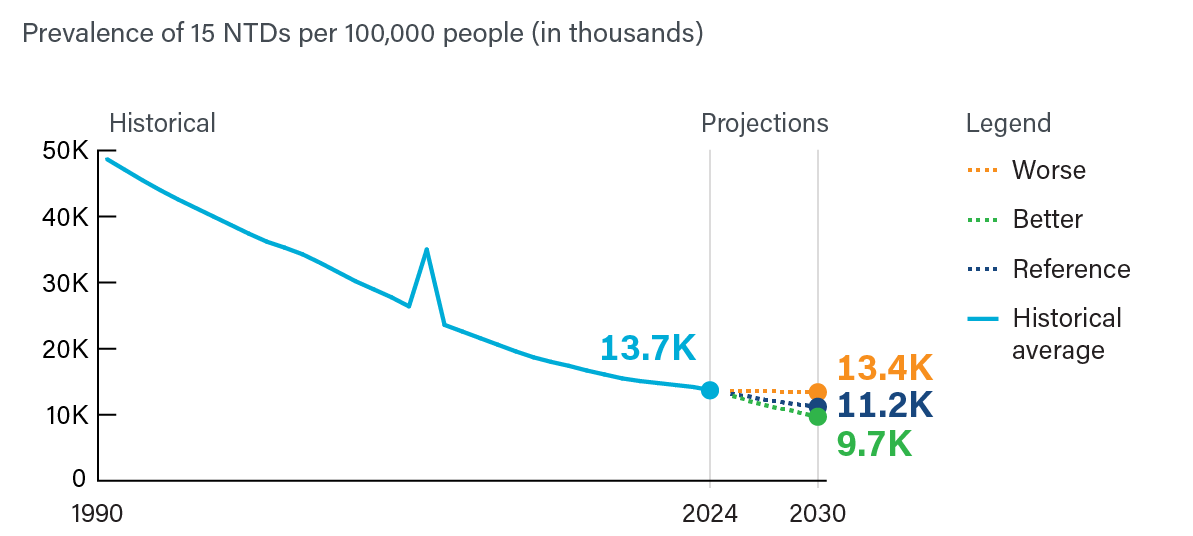
Neglected tropical diseases (NTDs) are a group of diseases that exert a crushing burden in poor and marginalized communities around the world, with women and girls often disproportionately affected. Named for the limited attention they have historically received, NTDs are inextricably linked to poverty and inequality. These diseases exact a heavy toll, causing chronic illness, severe disfigurement, blindness, and even death, and they can exacerbate malnutrition, delay cognitive development, and reduce economic productivity, entrenching affected populations in cycles of poverty. While increased attention in recent years has driven new resources and research breakthroughs, significant gaps remain in the arsenal of tools needed to control and eliminate these diseases, and climate change continues to expand vector-borne NTDs into new areas, underscoring the need for research and development (R&D) of new tools.
-
1 billion+ peopleworldwide are affected by NTDs
-
179 countriesreported an NTD in 2021
-
21 conditionsare classified as NTDs
Research successes
New tools are advancing control and elimination of NTDs:
- Two breakthrough drugs for sleeping sickness, a fatal neurological disease, were approved in the past decade: fexinidazole in 2018-the first all-oral, 10-day cure replacing a two-week hospital IV regimen-and acoziborole in 2026-a single-dose oral cure that further simplifies treatment, which could accelerate progress toward elimination.
- Vimkunya, a single-dose vaccine for chikungunya, a disease that causes debilitating joint pain, that was initially developed by NIH was approved in 2025 for teens and adults.
- A dengue vaccine, Qdenga, that is safe for use in individuals with and without prior infection was approved in 2022, with a long-term trial showing that it offers seven years of sustained protection against infection and hospitalization.
- The first new drug for onchocerciasis in 20 years, moxidectrin, was approved in 2018 to treat this disfiguring and blinding disease.
- New combination regimens of existing drugs are improving care, including a triple-drug regimen for lymphatic filariasis-a disabling and disfiguring disease-that was recommended in 2017, and several shorter, more effective therapies for visceral leishmaniasis-a fatal disease that causes spleen and liver damage-which have been introduced in the last two decades.
- Child-friendly drugs for intestinal parasitic worm infections, Chagas disease, and schistosomiasis were approved or recommended in 2026 and 2024, 2011, and 2024, respectively, enabling children to receive appropriate care for these painful parasitic diseases. USAID backed development of one of two new formulations for parasitic worm infections.
- New diagnostics, including rapid tests for onchocerciasis and lymphatic filariasis, developed with NIH research, and a test that detects all four dengue types, developed by CDC, have been introduced.
- Mosquitoes infected with Wolbachia, a bacterium that blocks viral replication within mosquitoes, reducing transmission, have been released to fight dengue and other mosquito-borne diseases in select locations worldwide, protecting more than 16 million people. NIH and USAID funded research into this approach.
Continued progress is possible, not inevitable
Key missing tools
To eliminate NTDs, we need new and improved tools, including:
- New and improved diagnostics to rapidly detect infection at the point of care in low-resource settings-including distinguishing between different strains or stages of disease-and to confirm elimination as transmission declines; tests that detect NTDs in environmental and animal samples to strengthen surveillance; and multiplex tests that can detect multiple NTDs and similar infections using the same sample, supporting integration into primary health care.
- New and improved treatments and cures, including child-appropriate therapies and shorter, simplified regimens with fewer side effects. Although low-cost, effective interventions exist for some NTDs, many current treatments are still lengthy, burdensome, and poorly tolerated, and child-friendly formulations are often unavailable despite several NTDs disproportionately affecting children.
- Vaccines to prevent infection. Beyond dengue and chikungunya, no vaccines exist for the remaining NTDs prioritized by the World Health Organization.
- New vector and biological control tools, including space spray insecticides and approaches that disrupt reproduction, to reduce mosquito and other vector populations.
- Antivenoms to treat snakebites, including both broad-spectrum products effective against multiple snake species and targeted products for bites from specific high-risk species.
- Water, sanitation, and hygiene tools and infrastructure, including innovations that enable safe water access, sanitation, and hygiene in low‑resource settings, which are essential to interrupting transmission of several NTDs.
Breakthroughs on the brink
- New shortened combination treatment regimens for Buruli ulcer, a chronic debilitating skin disease, are in the pipeline, including two treatments in Phase 2 trials that could cut treatment duration from eight weeks to just four.
- A repurposed veterinary drug is being evaluated in Phase 2/3 trials as a potential treatment for onchocerciasis and other parasitic worm infections; there are no cures for NTDs caused by parasitic worm infections, with current interventions mostly relying on mass drug administration in endemic areas.
- There is one vaccine for trachoma, a bacterial disease that can cause irreversible blindness, in the pipeline, which has shown promising results in a Phase 1 trial.
- A DoW-backed broad-spectrum rapid snakebite antidote, a first-of-its-kind treatment, has shown promise as an addition to antivenom for hospitalized patients in two Phase 2 trials and is being further evaluated in animal and human studies to establish the safety of a fully effective dose.
- Several vaccines for schistosomiasis-a disease that causes liver damage or kidney failure if left untreated-are in development, including an NIH-backed candidate in Phase 1 development and a NIH/DoW backed candidate now in Phase 2 trials.
- Two NIH-funded vaccine candidates against hookworm infection are in clinical development, including one in Phase 2 development. This parasitic infection causes gastrointestinal issues and protein deficiency and is linked to impaired learning in children.
- Point-of-care tests for Chagas disease, including for congenitally transmitted Chagas disease (the primary method of transmission in the United States), are being advanced with support from NIH.
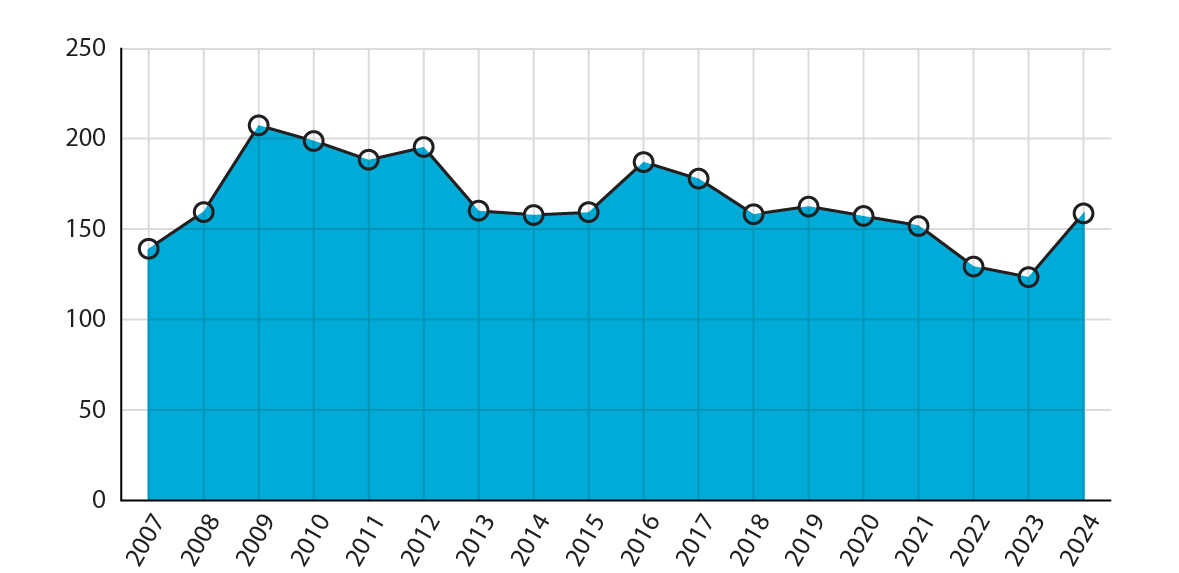
US government investment in NTD R&D, 2024 US$ millions
US government R&D efforts
The US government is advancing R&D to control and eliminate NTDs through a whole-of-government approach:
- National Institutes of Health (NIH) conducts basic and clinical research for new treatments, vaccines, diagnostics, vector control products, and other tools to combat NTDs.
- Department of War (DoW) undertakes R&D to create vaccines, drugs, diagnostics, and vector control products for NTDs that threaten US service members stationed abroad.
- Centers for Disease Control and Prevention (CDC) advances research to develop new and improved diagnostics and interventions to strengthen NTD control and elimination efforts.
- Department of State absorbed the US Agency for International Development (USAID), which has historically supported the development of new drugs and diagnostics for a select group of NTDs and supported the rollout of existing interventions. The breadth of the State Department's ongoing work in NTDs remains unclear.
- Food and Drug Administration, alongside approving products for use in the United States, administers the Tropical Disease Priority Review Voucher Program to incentivize investment in products for NTDs.
Introduction
NTDs: World Health Organization. Neglected tropical diseases. Accessed February 20, 2026. https://www.who.int/health-topics/neglected-tropical-diseases#tab=tab_2
Climate change: World Health Organization. Global Report on Neglected Tropical Diseases 2025. World Health Organization; 2025. https://www.who.int/teams/control-of-neglected-tropical-diseases/global-report-on-neglected-tropical-diseases-2025
1 billion+ people affected: World Health Organization. Neglected tropical diseases. Accessed February 20, 2026. https://www.who.int/health-topics/neglected-tropical-diseases#tab=tab_2
179 countries reported: More countries eliminate neglected tropical diseases but investments key to sustain progress. Press release. World Health Organization; January 30, 2023. https://www.who.int/news/item/30-01-2023-more-countries-eliminate-neglected-tropical-diseases-but-investments-key-to-sustain-progress
21 conditions: World Health Organization. Neglected tropical diseases. Accessed February 20, 2026. https://www.who.int/health-topics/neglected-tropical-diseases#tab=tab_2
Research successes
Two breakthrough sleeping-sickness drugs, fexinidazole:
Drugs for Neglected Diseases initiative. Fexinidazole for T.b. gambiense. Updated February 21, 2025. Accessed February 20, 2026. https://dndi.org/research-development/portfolio/fexinidazole/
Drugs for Neglected Diseases initiative. Fexinidazole for T.b. rhodesiense. Updated February 21, 2025. Accessed February 20, 2026. https://dndi.org/research-development/portfolio/fexinidazole-tb-rhodesiense/
Two breakthrough sleeping-sickness drugs, acoziborole: Drugs for Neglected Diseases initiative. Acoziborole. Updated February 27, 2025. Accessed March 2, 2026. https://dndi.org/research-development/portfolio/acoziborole/
Dengue vaccine, approval: Cáceres M and Fisher BL. WHO prequalifies Takeda's Qdenga dengue vaccine. The Vaccine Reaction. May 28, 2024. Accessed February 20, 2026. https://thevaccinereaction.org/2024/05/who-prequalifies-takedas-qdenga-dengue-vaccine/
Dengue vaccine, long-term trial: New Phase 3 data show Takeda's dengue vaccine delivers 7 years of sustained protection against infection and hospitalization. Press release. Takeda; November 3, 2025. https://www.takeda.com/newsroom/newsreleases/2025/dengue-vaccine/
Chikungunya vaccine: Bavarian Nordic receives US FDA approval of chikungunya vaccine for persons aged 12 and older. Press release. Bavarian Nordic; February 14, 2025. https://www.bavarian-nordic.com/investor/news/news.aspx?news=7053
New drug for onchocerciasis: First new treatment for river blindness approved by US FDA in 20 years. Press release. World Health Organization Special Programme for Research and Training in Tropical Diseases; June 14, 2018. https://tdr.who.int/newsroom/news/item/14-06-2018-first-new-treatment-for-river-blindness-approved-by-u-s-fda-in-20-years
Combination regimens, lymphatic filariasis:
World Health Organization. Global Report on Neglected Tropical Diseases 2025. World Health Organization; 2025. https://www.who.int/teams/control-of-neglected-tropical-diseases/global-report-on-neglected-tropical-diseases-2025
Njenga SM, Kanyi H, Okoyo C, et al. Triple-drug therapy with ivermectin, diethylcarbamazine and albendazole for the acceleration of lymphatic filariasis elimination in Kenya: programmatic implementation and results of the first impact assessment. PLOS Neglected Tropical Diseases. 2024;18(7):e0011942. doi:10.1371/journal.pntd.0011942
World Health Organization. Lymphatic filariasis. Updated November 21, 2024. Accessed February 20, 2026. https://www.who.int/news-room/fact-sheets/detail/lymphatic-filariasis
Combination regimens, visceral leishmaniasis: Drugs for Neglected Diseases initiative. Visceral leishmaniasis: Projects & achievements. Accessed March 2, 2026. https://dndi.org/diseases/visceral-leishmaniasis/projects-achievements/
Child-friendly drugs, parasitic worms: Global Health EDCTP3. Ghana becomes first country to approve new combination of medicines to treat worm infections. Global Health EDCTP3. February 18, 2026. Accessed February 20, 2026. https://www.global-health-edctp3.europa.eu/news-and-events/news/ghana-becomes-first-country-approve-new-combination-medicines-treat-worm-infections-2026-02-18_en
Child-friendly drugs, parasitic worms, USAID: PQM+ celebrates WHO prequalification of malaria and NTD medicines. Press release. U.S. Pharmacopeia; August 30, 2024. https://www.usp.org/news/pqm-plus-celebrates-who-prequalification-of-malaria-and-ntd-medicines
Child-friendly drugs for Chagas disease: Drugs for Neglected Diseases initiative. Chagas disease: Paediatric Benznidazole. Accessed July 17, 2024. https://dndi.org/research-development/portfolio/paediatric-benznidazole/
Child-friendly drugs for schistosomiasis: The European Medicines Agency adopts positive opinion of our treatment option for schistosomiasis in preschool-aged children. Press release. Pediatric Praziquantel Consortium; December 15, 2023. https://www.pediatricpraziquantelconsortium.org/newsroom/european-medicines-agency-adopts-positive-opinion-our-treatment-option-schistosomiasis
Rapid tests for onchocerciasis and lymphatic filariasis: Innovative partnership brings to market new tools for neglected tropical diseases. Press release. PATH; April 11, 2016. https://www.path.org/our-impact/media-center/innovative-partnership-brings-to-market-new-tools-for-neglected-tropical-diseases/
Test that detects all four types of dengue: CDC begins distribution of new dengue fever tests. Global Biodefense. June 18, 2012. Accessed February 20, 2026. https://globalbiodefense.com/2012/06/28/cdc-begins-distribution-of-new-dengue-fever-tests/
Mosquitoes infected with Wolbachia, protected 16 million people: World Mosquito Program. Accessed February 20, 2026. https://www.worldmosquitoprogram.org/
Mosquitoes infected with Wolbachia, NIH support: US National Institutes of Health National Institute of Allergy and Infectious Diseases. Neglected tropical diseases scientific findings. Accessed July 17, 2024. https://www.niaid.nih.gov/research/neglected-tropical-diseases-scientific-findings
Mosquitoes infected with Wolbachia, USAID support: US Agency for International Development. Combating Zika and Future Threats: A Grant Challenge for Development. US Agency for International Development; 2021. Retrieved from: https://www.usaid.gov/sites/default/files/2022-05/2a_-_Lessons_Learned_on_Supporting_Crisis-Related_Innovations_-_MAY_2021_-_WMP_Success_Story_FINAL_1.pdf. Archived at: https://web.archive.org/web/20250201105614/https://www.usaid.gov/sites/default/files/2022-05/2a_-_Lessons_Learned_on_Supporting_Crisis-Related_Innovations_-_MAY_2021_-_WMP_Success_Story_FINAL_1.pdf
Continued progress is possible, not inevitable
Gates Foundation. Goalkeepers 2025 Report. We Can't Stop at Almost. Gates Foundation; 2025. https://www.gatesfoundation.org/goalkeepers/report/2025-report/
Key missing tools
General: World Health Organization. Global Report on Neglected Tropical Diseases 2025. World Health Organization; 2025. https://www.who.int/teams/control-of-neglected-tropical-diseases/global-report-on-neglected-tropical-diseases-2025
Gap in recommended child-friendly formulations: World Health Organization. Paediatric Research and Development Landscape for Neglected Tropical Diseases: Report on the 1999–2022 Period. World Health Organization; 2024. https://iris.who.int/server/api/core/bitstreams/7a33155f-9840-4e5e-bce7-34689d32dd4e/content
Antivenoms: World Health Organization. Target Product Profiles for Animal Plasma-Derived Antivenoms: Antivenoms for Treatment of Snakebite Envenoming in Sub-Saharan Africa. World Health Organization; 2023. https://www.who.int/publications/i/item/9789240074569
Water, sanitation, and hygiene: World Health Organization. Water, sanitation and health. Accessed April 13, 2026. https://www.who.int/teams/environment-climate-change-and-health/water-sanitation-and-health/burden-of-disease/wash-and-neglected-tropical-diseases
Breakthroughs on the brink
Shortened combination treatment regimens for Buruli ulcer:
Singh S, Yotsue R, Nuremberger E, Srivastava S. Repurposing drugs to advance the treatment of Buruli ulcer. Antimicrobial Agents and Chemotherapy. 2025;69(5):e00029-25. doi:10.1128/aac.00029-25
Beta-lactam containing regimen for the shortening of Buruli ulcer disease therapy (BLMs4BU). ClinicalTrials.gov identifier: NCT05169554. Accessed February 20, 2026. https://clinicaltrials.gov/study/NCT05169554#collaborators-and-investigators
New clinical trial examines use of novel compound telacebec in Buruli ulcer patients. Press release. TB Alliance; August 21, 2024. https://www.tballiance.org/news-new-clinical-trial-examines-use-novel-compound-telacebec-buruli-ulcer-patients/
Potential treatment for onchocerciasis and other parasitic worm infections:
Drugs for Neglected Diseases initiative. Emodepside. Updated February 21, 2026. Accessed February 20, 2026. https://dndi.org/research-development/portfolio/emodepside/
Drugs for Neglected Diseases initiative (DNDi). DNDi 2025 Projects of the Year recognize contributions of DNDi teams and partners working to deliver urgently needed innovations for people affected by Chagas disease and river blindness. DNDi. October 3, 2025. Accessed February 20, 2026. https://dndi.org/news/2025/2025-projects-of-the-year-recognize-contributions-teams-partners-working-innovations-chagas-disease-river-blindness/
Trachoma vaccine:
Pollock KM, Borges AH, Cheeseman HM, et al. An investigation of trachoma vaccine regimens by the chlamydia vaccine CTH522 administered with cationic liposomes in healthy adults (CHLM-02): a Phase 1, double-blind trial. The Lancet Infectious Diseases. 2024;24(8):829-844. doi:10.1016/S1473-3099(24)00147-6
Statens Serum Institut. Vaccine strategies to protect against trachoma tested in humans. Updated April 12, 2024. Accessed February 20, 2026. https://en.ssi.dk/news/news/2024/vaccine-strategies-to-protect-against-trachoma-tested-in-humans
Broad-spectrum rapid snakebite antidote: Ophirex. Working to revolutionize snakebite treatment. Accessed February 20, 2026. https://www.ophirex.com/varespladib-for-human-use/
Several vaccines for schistosomiasis: Infectious Disease R&D Tracker. Impact Global Health; 2025. Accessed February 20, 2026. https://www.impactglobalhealth.org/data/infectious-disease
Several vaccines for schistosomiasis, NIH-backed candidate: Jackson LA, Coler RN, Deye GA, et al. Safety and immunogenicity of the Sm-p80 GLA-SE schistosomiasis vaccine. npj Vaccines. 2025;10(247). https://doi.org/10.1038/s41541-025-01261-3
Hookworm vaccine candidates: Infectious Disease R&D Tracker. Impact Global Health; 2025. Accessed February 20, 2026. https://www.impactglobalhealth.org/data/infectious-disease
Hookworm vaccine candidate, Phase 2: Efficacy of Na-GST-1/Alhydrogel hookworm vaccine assessed by controlled challenge infection. ClinicalTrials.gov identifier: NCT03172975. Accessed February 20, 2026. https://clinicaltrials.gov/study/NCT03172975?intr=Na-GST-1%2FAlhydrogel%20hookworm%20vaccine&rank=1#collaborators-and-investigators
Point-of-care Chagas test: Kephera Diagnostics gets $3M NIH grant for Chagas disease test. 360Dx. March 31, 2023. Accessed February 20, 2026. https://www.360dx.com/infectious-disease/kephera-diagnostics-gets-3m-nih-grant-chagas-disease-test
Point-of-care Chagas test, congenital: Kephera Diagnostics wins $606K NIH grant to develop test for congenital Chagas disease. 360Dx. April 30, 2024. Accessed February 20, 2026. https://www.360dx.com/point-care-testing/kephera-diagnostics-wins-606k-nih-grant-develop-test-congenital-chagas-disease
US government investment in NTD R&D
G-FINDER data portal. Policy Cures Research; 2026. Accessed February 2, 2026. https://gfinderdata.policycuresresearch.org/
US government R&D efforts
KFF. The US government and Global Neglected Tropical Disease Efforts. KFF; 2024. https://www.kff.org/global-health-policy/fact-sheet/the-u-s-government-and-global-neglected-tropical-diseases/
US Food and Drug Administration. Tropical Disease Priority Review Voucher Program. Updated June 13, 2024. Accessed February 20, 2026. https://www.fda.gov/about-fda/center-drug-evaluation-and-research-cder/tropical-disease-priority-review-voucher-program
R&D for Emerging Infectious Diseases
How new tools can transform the fight
In a world experiencing increasing human mobility and ecological change, emerging infectious diseases (EIDs) pose a growing threat to health security. As we saw with COVID-19, an outbreak in one corner of the world can quickly become a global pandemic with devastating human and economic costs. New vaccines, treatments, diagnostics, and other tools are urgently needed to outsmart epidemics. However, research and development (R&D) for EIDs is particularly challenging.
The market potential for tools against EIDs is too uncertain to drive commercial investment, and testing these products is especially difficult. Strong government support and smart collaboration between nations are vital to overcome these barriers and develop the tools needed to prevent, detect, and respond to these threats.
-
$12.5 trillionglobal economic cost of COVID-19
-
11,000+ liveslost from 2014-16 West Africa Ebola outbreak
-
3x projected increasein annual probability of extreme epidemics in coming decades
Key missing tools
We are without essential tools to combat many EIDs considered most likely to cause the next epidemic:
|
|
Vaccines | Treatments | Diagnostics |
|---|---|---|---|
| COVID-19 | Several vaccines are approved for adults and children, but new candidates aim to provide broad protection against existing and future variants, as well as to utilize new delivery methods, like nasal sprays. | Oral and intravenous treatments are approved but continued innovation is needed to optimize treatment, reduce variability in patient responses, improve efficacy for patients in advanced stages, and address variants. | Several rapid point-of-care (POC) tests and laboratory-based tests are available, but continued validation is needed for new variants. |
| Crimean-Congo Haemorrhagic fever (CCHF) | No FDA-approved vaccine is available. A Bulgarian-licensed vaccine exists, but its efficacy is unclear | No specific licensed treatment is available. An existing antiviral has been used during outbreaks, but its efficacy and optimal dosing remain unclear. | Commercial tests are available but require sophisticated laboratory infrastructure. Rapid POC tests are needed. |
| Ebola Sudan | No licensed vaccine. | No specific licensed treatment. | Confirmatory tests are available but require sophisticated laboratory infrastructure. Rapid POC tests are needed. |
| Ebola Zaire | Two vaccines are approved by stringent regulators for adults and children. | Two licensed treatments are FDA-approved and in use globally. | Several rapid POC tests and laboratory-based tests are in use globally, including FDA-approved and -authorized options, however, rapid antigen test results are presumptive, and laboratory confirmation remains important. |
| Lassa fever | No licensed vaccine. | No specific licensed treatment. An existing antiviral has been used as a treatment, but its efficacy and optimal dosing remain unclear. | Confirmatory tests are available but require sophisticated laboratory infrastructure, and validation is needed for different lineages. Rapid POC tests are needed. |
| Marburg | No licensed vaccine. | No specific licensed treatment. | Commercial tests are available but require sophisticated laboratory infrastructure. Rapid POC tests are needed. |
| Middle East respiratory syndrome (MERS) | No licensed vaccine. | No specific licensed treatment. | Commercial tests are available, including FDA-authorized options, but they require sophisticated laboratory infrastructure. Rapid POC tests are needed. |
| Mpox | Three vaccines are approved by stringent regulators, two of which are FDA-approved. While one of these vaccines has been recommended internationally for adolescents and is available for at-risk adolescents and children via FDA Emergency Use Authorization, continued research among children is ongoing to support future approvals. | No specific licensed treatment. Several antivirals for smallpox have received emergency use authorization in some countries and are being evaluated for mpox. | Commercial tests are available, including FDA-authorized options, but they require sophisticated laboratory infrastructure or specialized testing systems. Further validation is needed for different clades, as well as additional rapid, affordable POC tests, including those that can aid differential diagnosis of similar diseases. |
| Nipah | No licensed vaccine. | No specific licensed treatment. | Commercial tests are available but require sophisticated laboratory infrastructure. Rapid POC tests are needed. |
| Rift Valley fever (RVF) | No licensed human vaccine. There is a vaccine developed for human use that has been used experimentally to protect veterinary and laboratory personnel at high risk of exposure, but it is not licensed or commercially available. | No specific licensed treatment; most cases are relatively mild and short and don’t require specific treatment, but some cases can be severe, underscoring the need for a specific therapy. | Commercial tests are available but require sophisticated laboratory infrastructure. Rapid POC tests are needed. |
| Severe Acute Respiratory Syndrome | No licensed vaccine. COVID-19 vaccines could offer some cross-protection but require further study. | No specific licensed treatment; antivirals used for COVID-19 could be effective but require further study. | Commercial tests are available but require sophisticated laboratory infrastructure. Rapid POC tests are needed. |
| Zika | No licensed vaccine. | No specific licensed treatment. | Laboratory-based molecular and serologic tests are available, including FDA-authorized options, but diagnosis is complicated by a short detection window and cross-reactivity with related flaviviruses. A validated rapid POC test remains a gap. |
| Pandemic influenza | No licensed universal vaccine. Existing flu vaccines may offer some cross protection. | Existing antivirals may be effective. Additional broad-spectrum antivirals are needed. | Confirmatory tests are available but not all commercially. Rapid POC tests that can be quickly adapted to address new strains will be needed. |
Research progress
- Several COVID-19 vaccines, therapeutics, and rapid POC diagnostic tests were developed with cross-US-government support, significantly changing the course of the pandemic. Next-generation nasal COVID-19 vaccines, combination influenza and COVID-19 vaccines, and pan-coronavirus vaccines are now in development with US support.
- Two licensed vaccines, two approved therapeutics, and a rapid POC test for Ebola Zaire were developed via various partnerships with NIH, DoW, and BARDA. Since their introduction, these tools have helped bring subsequent outbreaks under control more quickly, dramatically reducing their scale and toll.
- Promising vaccines for Ebola Sudan and Marburg—a deadly cousin of the Ebola virus—which were developed by NIH are undergoing Phase 2 trials with BARDA support at a DoW-supported overseas lab, so they will be poised for large-scale trials when the next deadly outbreak of these diseases occur. A Phase 1 trial of another DoW/BARDA-backed Marburg vaccine is ongoing.
- Thanks to investments from BARDA, the United States was prepared with an approved mpox vaccine when the global epidemic hit. Researchers are now advancing an adapted version of this vaccine for young children.
- Vaccines for several other EIDs have recently entered or advanced in clinical trials, including the first Phase 2 human trial of a Nipah vaccine, the first Phase 2 study of a Lassa vaccine, a Phase 2 trial of a Zika vaccine, and a Phase 2 trial of a RVF vaccine.
- Clinical trials are underway for several potential universal flu vaccine candidates, including several candidates in Phase 1 and 2 trials developed by NIH's National Institute of Allergy and Infectious Diseases.
- Numerous diagnostic tools for EIDs beyond Ebola and COVID-19 have been advanced to market, including two tests for Zika that have received full FDA marketing authorization, as well as eight for mpox and two for MERS that received Emergency Use Authorization. New rapid tests are also in the pipeline, including a rapid POC test for CCHF, as well as multiple BARDA-supported rapid Marburg tests.
US government investment in R&D for EIDs, 2024 US$ millions
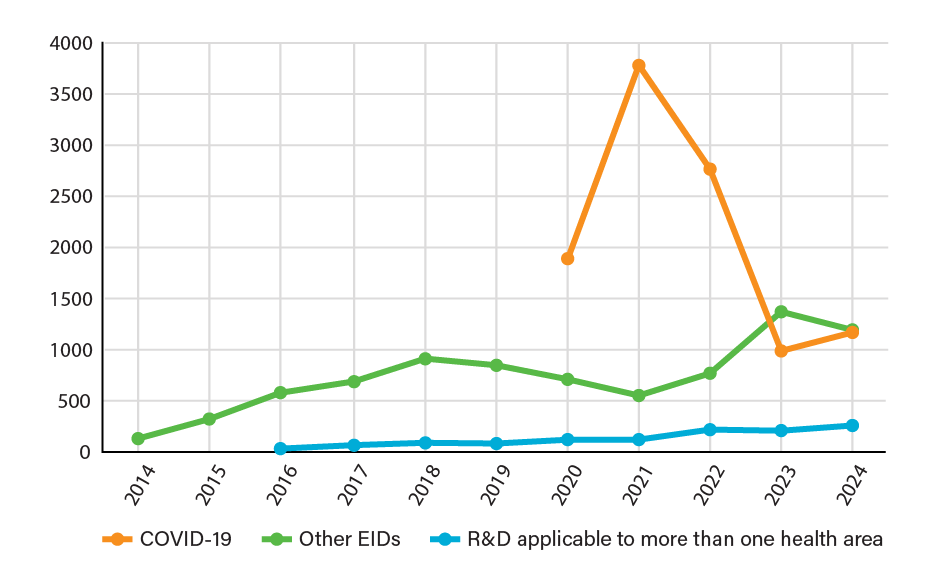
US government R&D efforts
The US government is developing tools to improve health security through a whole-of-government approach:
- Biomedical Advanced Research and Development Authority (BARDA) supports the advanced development of vaccines, drugs, diagnostics, and other medical countermeasures against EIDs considered a threat to national security.
- National Institutes of Health (NIH) conducts basic and clinical research to advance new treatments, vaccines, diagnostics, and vector control products to combat EIDs.
- Department of War (DoW) supports R&D to create vaccines, drugs, and other tools for EIDs considered a threat to US service members or to national security.
- Centers for Disease Control and Prevention works to develop new and improved diagnostics and surveillance tools to improve global capacity to prevent, detect, and respond to outbreaks.
- Department of State oversees the US contribution to the Coalition for Epidemic Preparedness Innovations, a global vaccine development partnership for EIDs, and supports partner country preparedness efforts. Prior to the integration of the US Agency for International Development (USAID) into the State Department, USAID supported the development of select tools to combat EIDs designed for low-resource settings and research to detect epidemic-risk viruses, and there is opportunity for State to take on similar R&D activities.
- Food and Drug Administration (FDA), alongside approving products for use in the United States, administers the Tropical Disease and Material Threat Medical Countermeasures Priority Review Programs to incentivize industry investment in products for select EIDs and grants Emergency Use Authorization to permit the use of not-yet-approved products during an emergency.
Introduction
$12.5 trillion cost: IMF sees cost of COVID pandemic rising beyond $12.5 trillion estimate. Reuters. January 20, 2022. Accessed February 24, 2026. https://www.reuters.com/business/imf-sees-cost-covid-pandemic-rising-beyond-125-trillion-estimate-2022-01-20/
11,000+ lives lost to Ebola: World Health Organization. Ebola: West Africa, March 2014-2016. Accessed February 24, 2026. https://www.who.int/emergencies/situations/ebola-outbreak-2014-2016-West-Africa
3x projected increase in probability of epidemics: Joi P. New study suggests risk of extreme pandemics like COVID-19 could increase threefold in coming decades. VaccinesWork blog. September 5, 2022. Accessed February 24, 2026. https://www.gavi.org/vaccineswork/new-study-suggests-risk-extreme-pandemics-covid-19-could-increase-threefold-coming
Key missing tools
COVID-19:
MedicalCountermeasures.gov. COVID-19 portfolio. Accessed February 24, 2026. https://medicalcountermeasures.gov/app/barda/coronavirus/COVID19.aspx
Coalition for Epidemic Preparedness Innovations. COVID-19. Accessed February 24, 2026. https://cepi.net/COVID-19
Alves MCS, da Silva RCC, de Leitão-Júnior SSP, de Balbino VQ. Therapeutic approaches for COVID-19: a review of antiviral treatments, immunotherapies, and emerging interventions. Advances in Therapy. 2025;42(7):3045-3058. doi:10.1007/s12325-025-03218-3
Nasal COVID-19 vaccine based on WashU technology to enter the U.S. clinical trials. Press release. Washington University School of Medicine; February 5, 2025. https://medicine.washu.edu/news/nasal-covid-19-vaccine-based-on-washu-technology-to-enter-u-s-clinical-trials/
CCHF:
World Health Organization. Crimean-Congo haemorrhagic fever. Accessed February 24, 2026. https://www.who.int/news-room/fact-sheets/detail/crimean-congo-haemorrhagic-fever
World Health Organization. Crimean-Congo Haemorrhagic Fever Research and Development (R&D) Roadmap. World Health Organization; 2019. https://www.who.int/publications/m/item/crimean-congo-haemorrhagic-fever-(cchf)-research-and-development-(r-d)-roadmap
Muzammil K, Rayyani S, Abbas Sahib A, et al. Recent advances in Crimean-Congo hemorrhagic fever virus detection, treatment, and vaccination: overview of current status and challenges. Biological Procedures Online. 2024;26(20). https://doi.org/10.1186/s12575-024-00244-3
Pathogen Diagnostics Readiness Index. FIND; 2024. Accessed February 24, 2026. https://www.finddx.org/data-and-impact/dashboards/diagnostic-readiness-index/#/
Ebola Sudan:
Ibrahim SK, Ndwandwe DE, Thomas K, Sigfrid L, Norton A. Sudan virus disease outbreak in Uganda: urgent research gaps. BMJ Global Health. 2022;7:e010982. https://doi.org/10.1136/bmjgh-2022-010982
World Health Organization. Ebola disease. April 24, 2025. Accessed February 24, 2026. https://www.who.int/news-room/fact-sheets/detail/ebola-disease
Coalition for Epidemic Preparedness Innovations. Ebola. Accessed February 24, 2026. https://cepi.net/ebola
IAVI. Sudan virus vaccine. Accessed February 24, 2026. https://www.iavi.org/our-work/emerging-infectious-diseases/sudan-virus-vaccine/
Emperador DM, Sayyad L, Brady M, et al. Laboratory evaluation of antigen rapid diagnostic tests to detect Ebola and Sudan viruses. Journal of Clinical Virology. 2025(179);105830. https://doi.org/10.1016/j.jcv.2025.105830
Ebola Zaire:
World Health Organization. Ebola disease. April 24, 2025. Accessed February 24, 2026. https://www.who.int/news-room/fact-sheets/detail/ebola-disease
Coalition for Epidemic Preparedness Innovations. Ebola. Accessed February 24, 2026. https://cepi.net/ebola
MedicalCountermeasures.gov. FDA approvals, licensures & clearances for BARDA supported products. Accessed February 24, 2026. https://medicalcountermeasures.gov/barda/fdaapprovals
US Food and Drug Administration. Emergency Use Authorization. Accessed February 24, 2026. https://www.fda.gov/emergency-preparedness-and-response/mcm-legal-regulatory-and-policy-framework/emergency-use-authorization#ebola
World Health Organization. Ebola virus disease vaccines. October 16, 2025. Accessed February 24, 2026. https://www.who.int/news-room/questions-and-answers/item/ebola-vaccines
US Centers for Disease Control and Prevention. Ebola. January 30, 2025. Accessed February 24, 2026. https://www.cdc.gov/ebola/hcp/clinical-guidance/index.html
Lassa fever:
World Health Organization. Lassa fever. Updated December 5, 2024. Accessed February 24, 2026. https://www.who.int/news-room/fact-sheets/detail/lassa-fever
Infectious Disease R&D Tracker. Impact Global Health; 2025. Accessed February 24, 2026. https://www.impactglobalhealth.org/data/infectious-disease/dashboard
IAVI. Emerging infectious diseases. Accessed February 24, 2026. https://www.iavi.org/our-work/emerging-infectious-diseases/
Pathogen Diagnostics Readiness Index. FIND; 2024. Accessed February 24, 2026. https://www.finddx.org/data-and-impact/dashboards/diagnostic-readiness-index/#/
Coalition for Epidemic Preparedness Innovations. Testing the tests: Scientists seek out best on-the-spot diagnostics for deadly Nipah and Lassa. Coalition for Epidemic Preparedness Innovations. February 14, 2024. Accessed February 24, 2026. https://cepi.net/testing-tests-scientists-seek-out-best-spot-diagnostics-deadly-nipah-and-lassa
Mazzola L, Chi HF, Cherkaoui D, et al. Landscape analysis of Lassa virus diagnostic tests: challenges, innovations and future directions. Diagnostic Microbiology and Infectious Disease. 2026;114(2):117151. https://doi.org/10.1016/j.diagmicrobio.2025.117151
Marburg:
World Health Organization. Marburg virus disease. January 20, 2025. Accessed February 24, 2026. https://www.who.int/news-room/fact-sheets/detail/Marburg-virus-disease
Pathogen Diagnostics Readiness Index. FIND; 2024. Accessed February 24, 2026. https://www.finddx.org/data-and-impact/dashboards/diagnostic-readiness-index/#/
MERS:
World Health Organization. Middle East respiratory syndrome coronavirus (MERS-CoV). Accessed February 24, 2026. https://www.who.int/health-topics/middle-east-respiratory-syndrome-coronavirus-mers
US Food and Drug Administration. Emergency Use Authorization. Accessed February 24, 2026. https://www.fda.gov/emergency-preparedness-and-response/mcm-legal-regulatory-and-policy-framework/emergency-use-authorization
Mpox:
Administration for Strategic Preparedness and Response. SNS products: Vaccines and treatment available for use in the monkeypox response. Accessed February 24, 2026. https://aspr.hhs.gov/SNS/Pages/Mpox.aspx
US National Institutes of Health National Institute of Allergy and Infectious Diseases. Mpox vaccines. Updated September 6, 2024. Accessed February 24, 2026. https://www.niaid.nih.gov/diseases-conditions/mpox-vaccines
US National Institutes of Health National Institute of Allergy and Infectious Diseases. Mpox treatment. Updated February 5, 2024. Accessed February 24, 2026. https://www.niaid.nih.gov/diseases-conditions/mpox-treatment
World Health Organization. Mpox. August 26, 2024. Accessed February 24, 2026. https://www.who.int/news-room/fact-sheets/detail/mpox
WHO grants approval for use of Bavarian Nordic's mpox vaccine in adolescents. Press release. World Health Organization (WHO); October 18, 2024. https://extranet.who.int/prequal/news/who-grants-approval-use-bavarian-nordics-mpox-vaccine-adolescents
Infectious Disease R&D Tracker. Impact Global Health; 2025. Accessed February 24, 2026. https://www.impactglobalhealth.org/data/infectious-disease/dashboard
US Food and Drug Administration. Monkeypox (mpox) Emergency Use Authorizations for medical devices. Accessed February 24, 2026. https://www.fda.gov/medical-devices/emergency-use-authorizations-medical-devices/monkeypox-mpox-emergency-use-authorizations-medical-devices
Nipah:
World Health Organization. Nipah virus. Updated January 29, 2026. Accessed February 24, 2026. https://www.who.int/news-room/fact-sheets/detail/nipah-virus
World Health Organization. Nipah Research and Development (R&D) Roadmap. World Health Organization; 2019. https://cdn.who.int/media/docs/default-source/blue-print/nipah_rdblueprint_roadmap_advanceddraftoct2019.pdf
Infectious Disease R&D Tracker. Impact Global Health; 2025. Accessed February 24, 2026. https://www.impactglobalhealth.org/data/infectious-disease/dashboard
Coalition for Epidemic Preparedness Innovations. Nipah. Accessed February 24, 2026. https://cepi.net/nipah
Mazzola L, Fru HC, Cherkaoui D, et al. Diagnostic tests for Nipah virus: a landscape analysis. Diagnostic Microbiology and Infectious Disease. 2026;114(1):117101. doi:10.1016/j.diagmicrobio.2025.117101
RVF:
World Health Organization. Rift Valley fever. December 20, 2024. Accessed February 24, 2026. https://www.who.int/news-room/fact-sheets/detail/rift-valley-fever
Coalition for Epidemic Preparedness Innovations. Rift Valley fever. Accessed February 24, 2026. https://cepi.net/rift-valley-fever
Lapa D, Pauciullo S, Ricci I, et al. Rift Valley fever virus: an overview of the current status of diagnostics. Biomedicines. 2024;12(3):540. doi:10.3390/biomedicines12030540
SARS:
World Health Organization. Severe Acute Respiratory Syndrome (SARS). Accessed February 24, 2026. https://www.who.int/health-topics/severe-acute-respiratory-syndrome#tab=tab_1
Zika:
World Health Organization. Zika virus. November 6, 2025. Accessed February 24, 2026. https://www.who.int/news-room/fact-sheets/detail/zika-virus
US Food and Drug Administration. Emergency Use Authorization. Accessed February 24, 2026. https://www.fda.gov/emergency-preparedness-and-response/mcm-legal-regulatory-and-policy-framework/emergency-use-authorization#zika
Boeras D, Diagne CT, Pelegrino JL, et al. Evaluation of Zika rapid tests as aids for clinical diagnosis and epidemic preparedness. eClinicalMedicine. 2022;49:101478. doi:10.1016/j.eclinm.2022.101478
Pandemic influenza:
US Centers for Disease Control and Prevention. About pandemic influenza. March 27, 2024. Accessed February 24, 2026. https://www.cdc.gov/pandemic-flu/basics/index.html
Fuller D. How do you make a universal flu vaccine? A microbiologist explains the challenges, and how mRNA could offer a promising solution. The Conversation. February 7, 2023. Accessed February 24, 2026. https://theconversation.com/how-do-you-make-a-universal-flu-vaccine-a-microbiologist-explains-the-challenges-and-how-mrna-could-offer-a-promising-solution-195807
Jones JC, Yen H-L, Adams P, Armstrong K, Gocorkova EA. Influenza antivirals and their role in pandemic preparedness. Antiviral Research. 2023;210:105499. https://doi.org/10.1016/j.antiviral.2022.105499
Research progress
COVID-19 vaccines, therapeutics, rapid POC tests: MedicalCountermeasures.gov. COVID-19 portfolio. Accessed February 24, 2026. https://medicalcountermeasures.gov/app/barda/coronavirus/COVID19.aspx
Nasal COVID-19 vaccines: US National Institutes of Health (NIH) National Institute of Allergy and Infectious Diseases. NIH-sponsored trial of nasal COVID-19 vaccine opens. NIH National Institute of Allergy and Infectious Diseases. July 1, 2024. Accessed February 24, 2026. https://www.niaid.nih.gov/news-events/nih-sponsored-trial-nasal-covid-19-vaccine-opens
Combination influenza and COVID-19 vaccine: Taylor P. Moderna says COVID/flu shot clears Phase 3 hurdle. PharmaPhorum. June 10, 2024. Accessed February 24, 2026. https://pharmaphorum.com/news/moderna-says-covidflu-shot-clears-phase-3-hurdle
Pan-coronavirus vaccine: Pancoronavirus vaccine study in healthy adults. ClinicalTrials.gov identifier: NCT06950177. Accessed February 24, 2026. https://clinicaltrials.gov/study/NCT06950177#collaborators-and-investigators
Ebola Zaire: MedicalCountermeasures.gov. FDA approvals, licensures & clearances for BARDA supported products. Accessed February 24, 2026. https://medicalcountermeasures.gov/barda/fdaapprovals
Ebola Sudan vaccine: Sabin Vaccine Institute. Sudan ebolavirus vaccine development program. Accessed February 24, 2026. https://www.sabin.org/vaccine-research-and-development/sudan-ebolavirus-vaccine-development-program/
Marburg vaccines:
Sabin Vaccine Institute. Marburg vaccine development program. Accessed February 24, 2026. https://www.sabin.org/vaccine-research-and-development/marburg-vaccine-development-program/
Sabin begins Marburg vaccine trial in U.S. Press release. Sabin Vaccine Institute; April 16, 2025. https://www.sabin.org/resources/sabin-begins-marburg-vaccine-trial-in-u-s/
IAVI. Marburg virus vaccine. Accessed February 24, 2026. https://www.iavi.org/our-work/emerging-infectious-diseases/marburg-virus-vaccine/
Mpox vaccine: Administration for Strategic Preparedness and Response. SNS products: Vaccines and treatment available for use in the mpox response. Accessed February 24, 2026. https://aspr.hhs.gov/SNS/Pages/Mpox.aspx
Mpox vaccine, children: Bavarian Nordic reports positive topline data for mpox/smallpox vaccine in pediatric population. Press release. Bavarian Nordic; October 7, 2025. https://www.bavarian-nordic.com/investor/news/news.aspx?news=7320
Vaccines in clinical development, Nipah vaccine: University of Oxford. World's first Phase II Nipah virus vaccine trial launch. University of Oxford. December 15, 2025. Accessed February 24, 2026. https://www.ox.ac.uk/news/2025-12-15-worlds-first-phase-ii-nipah-virus-vaccine-trial-launch
Vaccines in clinical development, Lassa vaccine: A Lassa fever vaccine trial in adults and children residing in West Africa. ClinicalTrials.gov identifier: NCT05868733. Accessed February 24, 2026. https://clinicaltrials.gov/study/NCT05868733
Vaccines in clinical development, Zika vaccine: VRC 705: A Zika virus DNA vaccine in healthy adults and adolescents (DNA). ClinicalTrials.gov identifier: NCT03110770. Accessed February 24, 2026. https://clinicaltrials.gov/study/NCT03110770?tab=study#study-overview
Vaccines in clinical development, RVF: Centre for Tropical Medicine and Global Health. First volunteers receive Rift Valley fever vaccine in Kenya Phase II trial. Centre for Tropical Medicine and Global Health. August 15, 2025. Accessed February 24, 2026. https://www.tropicalmedicine.ox.ac.uk/news/first-volunteers-receive-rift-valley-fever-vaccine-in-kenya-phase-ii-trial
Universal flu vaccine candidates: Universal Influenza Vaccine Technology Landscape. The IVR Initiative; 2019. Accessed February 24, 2026. https://ivr.cidrap.umn.edu/universal-influenza-vaccine-technology-landscape
Diagnostic tools, Zika: US Food and Drug Administration. Emergency Use Authorization. Accessed February 24, 2026. https://www.fda.gov/emergency-preparedness-and-response/mcm-legal-regulatory-and-policy-framework/emergency-use-authorization#zika
Diagnostic tools, mpox: US Food and Drug Administration. Monkeypox (mpox) Emergency Use Authorizations for medical devices. Accessed February 24, 2026. https://www.fda.gov/medical-devices/emergency-use-authorizations-medical-devices/monkeypox-mpox-emergency-use-authorizations-medical-devices
Diagnostic tools, MERS: US Food and Drug Administration. Emergency Use Authorization. Accessed February 24, 2026. https://www.fda.gov/emergency-preparedness-and-response/mcm-legal-regulatory-and-policy-framework/emergency-use-authorization#MERS
Diagnostic tools, CCHF:
The Pandemic Institute. World's first rapid test developed for Crimean-Congo haemorrhagic fever. The Pandemic Institute. January 14, 2025. Accessed February 24, 2026. https://www.thepandemicinstitute.org/news/worlds-first-rapid-test-developed-for-crimean-congo-haemorrhagic-fever/
Development of a rapid diagnostic test to identify Crimean-Congo Haemorrhagic fever at the point-of-care. ClinicalTrials.gov identifier: NCT06624787. Accessed February 24, 2026. https://clinicaltrials.gov/study/NCT06624787#study-overview
Diagnostic tools, Marburg: OraSure receives federal funding for development of Marburg virus rapid antigen test. Press release. OraSure Technologies, Inc.; December 3, 2024. https://www.biospace.com/press-releases/orasure-receives-federal-funding-for-development-of-marburg-virus-rapid-antigen-test
US government investment in R&D for EIDs
G-FINDER data portal. Policy Cures Research; 2026. Accessed February 2, 2026. https://gfinderdata.policycuresresearch.org/
US government R&D efforts
US Department of State. America First Global Health Strategy. US Department of State; 2025. https://www.state.gov/america-first-global-health-strategy
MedicalCountermeasures.gov. Division of Clinical Development. Accessed February 24, 2026. https://medicalcountermeasures.gov/barda/dcd
KFF. The US government and Global Health Security. KFF; 2023. https://www.kff.org/global-health-policy/the-u-s-government-and-global-health-security/
R&D for Newborn & Child Health
How new tools can transform the fight
The chances of a child surviving and thriving are vastly different depending on where in the world they were born. For example, children in sub-Saharan Africa are 14 times more likely to die before the age of five than those born in high-income countries like the United States. Having the right intervention or tool at the right time is one of the most crucial factors for survival. Thanks to global efforts to develop and scale up health solutions, child deaths have declined worldwide by 63% and neonatal deaths by 56% since 1990. But vast challenges remain. Intensified research and development (R&D) efforts are needed to advance new pediatric drugs, vaccines, and other low-cost, easy-to-use technologies to address common causes of newborn and child deaths in the world’s poorest places.
-
4.8 millionchildren under five die each year
-
2.3 millionnewborns die each year
-
1.9 millionstillbirths occur each year
Research
successes
New technologies have driven significant improvements in newborn and child health:
- Vaccines against childhood diseases, including polio, measles, diphtheria, tetanus, pneumonia, and other illnesses, have saved more than 150 million children over the past 50 years.
- Interventions to treat and prevent diarrhea—including oral rehydration solutions, zinc supplements, and low-cost vaccines against rotavirus, cholera, and typhoid—have helped reduce child deaths from diarrheal disease by 63% since 2000.
- Tools to prevent and treat malaria in children—including insecticide-treated bednets, chemoprevention, child- and infant-friendly medicines, and vaccines—have significantly reduced child deaths.
- Nutrition innovations, like biofortified crops, ready-to-use therapeutic foods, and vitamin and multiple micronutrient supplements, are helping more infants and children survive and thrive.
- Child-friendly adapted therapies, including those for HIV and tuberculosis, have improved treatment outcomes for children worldwide.
- Approaches to prevent maternal-to-child transmission of HIV have contributed to a 62% decline in new infections in children since 2010.
- Newborn care technologies and interventions now in widespread use globally, such as low-cost bubble CPAP systems that help babies breathe, chlorhexidine for newborn cord care to prevent infection, and affordable photo-therapy systems to treat neonatal jaundice.
- New prevention options for respiratory syncytial virus (RSV), a leading cause of infant illness and death, including a maternal vaccine that provides passive protection to newborns and preventative antibody shots for infants have been introduced in recent years, though they are still not yet broadly available in many low- and middle-income countries.
Key missing tools
New tools are needed to advance newborn and child health, including:
- Child- and infant-friendly formulations of existing and new medicines that are appropriately dosed, dissolvable, and palatable.
- Innovations to improve immunization coverage for vulnerable, hard-to-reach populations, such as heat-stable versions of vaccines that do not require refrigeration or easy-to-use, pain-free oral formulations.
- Vaccines for major childhood killers, including Group B streptococcus and other bacterial causes of sepsis, as well as diarrheal disease pathogens enterotoxigenic Escherichia coli and Shigella, in addition to expanded maternal immunization solutions to protect newborns early in life.
- Affordable, durable devices suitable for managing common newborn health issues in low-resource settings, including better respiratory support and oxygen delivery technologies, pulse oximeters, and ventilators to support and monitor breathing; reliable incubators and thermal regulation devices for areas with limited electricity; easier-to-use, battery-free systems and syringe pumps for precise delivery of fluid and medicines; low-cost, easy-to-maintain continuous monitoring systems; and AI-enabled solutions to flag worrisome vital signs and guide care.
- Rapid, affordable point-of-care diagnostics appropriate for low-resource settings, such as improved diagnostic tools for neonatal sepsis, pneumonia and other respiratory infections, and diarrheal disease pathogens.
- Validated interventions to improve the gut microbiome to address undernutrition and other susceptibility factors for illness, as well as diagnostic tools to assess gut health and environmental enteric dysfunction, a major underlying cause of malnutrition and vaccine failure in children.
Continued progress is possible, not inevitable
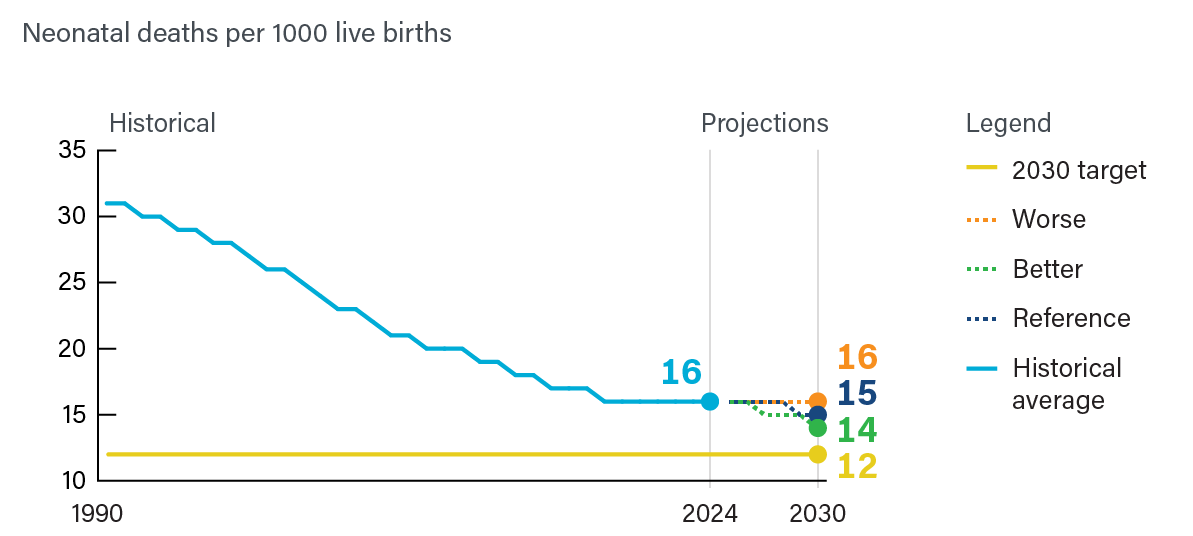
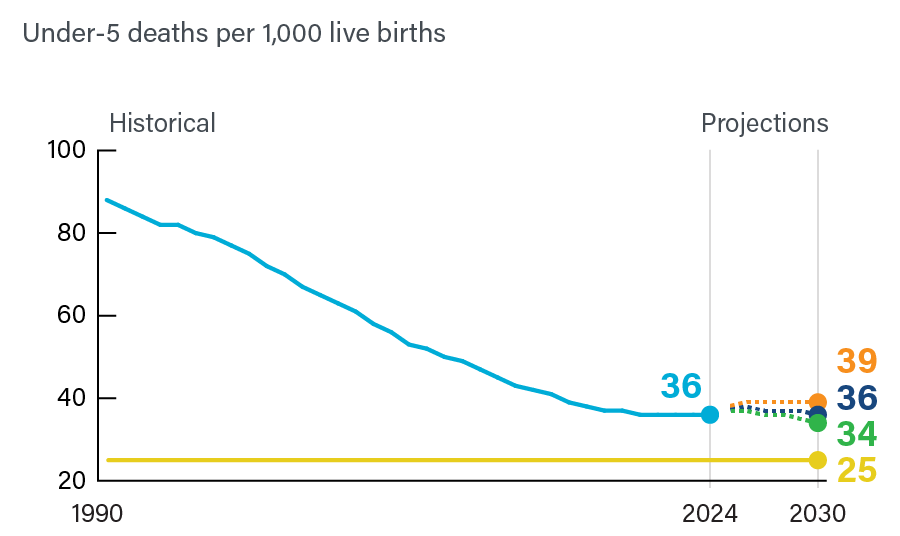
Breakthroughs on the brink
- A vaccine to prevent enterotoxigenic E. coli, a major global cause of diarrheal disease and death in children, which showed promise in Phase 2 trials. To date, there is no effective vaccine against this pathogen.
- A maternal vaccine for Group B streptococcus, a dangerous bacterial infection carried by one in four pregnant women that can be transmitted to an infant during pregnancy or childbirth, leading to deadly conditions like meningitis, sepsis, and pneumonia. The vaccine, which completed Phase 2 trials, harnesses passive immunity, a process in which vaccinated mothers pass on antibodies to their babies, which protect them during their first weeks to months of life.
- A microarray needle-free "button" that could one day be used for delivering vaccines and treatments without injections. Developed with support from CDC and BARDA, this innovative, pain-free solution that requires no refrigeration could reduce barriers to vaccination and treatment for children both globally and in the United States.
- The OdonAssist™, a promising new tool previously supported by USAID, uses air pressure and suction to gently assist with delivery during obstructed labor. It has market clearance in Europe but is not yet widely available globally.
- Several child-focused HIV technologies in development aim to close gaps in prevention and treatment early in life, including an NIH-supported trial of an experimental HIV vaccine for infants, as well as a trial to establish dosing recommendations for a child-friendly formulation of the drug dolutegravir for infants under one month old, a group for which no approved or guideline-recommended formulations exist.
- Three promising malaria monoclonal antibody therapies are in clinical development to prevent infection, including two developed with NIH support. These long-acting antibodies have shown potential to provide immediate, months-long protection after a single injection, addressing a key gap in malaria prevention for young children in high-transmission settings.
- A continuous, wireless vital-sign monitoring platform, developed with support from NIH, BARDA, and DoW, that could help identify potential health complications in real time, whether at home or in a hospital setting, helping improve care for newborns and pregnant women. This product has market clearance in the United States and is undergoing pilot use studies in low-resource settings worldwide to support global uptake.
US government R&D efforts
The US government is advancing research to improve newborn and child health through a whole-of-government approach:
- National Institutes of Health (NIH) conducts basic, clinical, and implementation research to develop and improve tools to advance newborn and child health and address infectious diseases and other conditions that disproportionately impact children.
- Department of War (DoW) supports R&D for diseases like malaria and diarrheal diseases that pose a risk to service members stationed abroad and that are also leading killers of children.
- Department of State supports the delivery and scale-up of vaccines, treatments, and other tools and services to improve newborn and child health globally. It has the potential to support R&D efforts, previously led by the US Agency for International Development (USAID), focused on advancing affordable, fit-for-purpose tools to address leading newborn and child health challenges.
- Biomedical Advanced Research and Development Authority (BARDA) advances the development of solutions to address antimicrobial resistance and pandemic threats, which can have spillover benefits for newborn and child health.
- Centers for Disease Control and Prevention (CDC) operates global immunization programs, conducts surveillance and epidemiological research to inform the use of existing tools, and provides technical assistance to country partners to strengthen public health capacity.
- Food and Drug Administration, alongside approving products for use in the United States, administers the Tropical Disease Priority Review Voucher Program to incentivize investment in products for certain neglected diseases and implements an expedited approval pathway for antibiotics relevant to newborn and child health.
Introduction
4.8 million children die, 2.3 million newborns die, percent declines in child and neonatal deaths: United Nations Inter-agency Group for Child Mortality Estimation. Levels & Trends in Child Mortality: Report 2024. UNICEF; 2025. https://data.unicef.org/resources/levels-and-trends-in-child-mortality-2024/
1.9 million stillbirths: UNICEF. Stillbirth. Accessed February 20, 2026. https://data.unicef.org/topic/child-survival/stillbirths/
Children in sub-Saharan Africa 14 times more likely to die: UNICEF. Under-five mortality. Accessed February 20, 2026. https://data.unicef.org/topic/child-survival/under-five-mortality/
Research successes
Vaccines against childhood diseases: Ritchie H. Vaccines have saved 150 million children over the last 50 years. Our World in Data. May 6, 2024. Accessed February 20, 2026. https://ourworldindata.org/vaccines-children-saved
Interventions to treat and prevent diarrhea, reduction in diarrhea deaths: UNICEF. Diarrhoea. Accessed February 20, 2026. https://data.unicef.org/topic/child-health/diarrhoeal-disease/
Tools to prevent and treat malaria, insecticide-treated bednets: US Centers for Disease Control and Prevention. Insecticide-treated nets. Updated April 2, 2024. Accessed February 23, 2026. https://www.cdc.gov/malaria/php/public-health-strategy/insecticide-treated-nets.html
Tools to prevent and treat malaria, chemoprevention for children: World Health Organization (WHO). Updated WHO recommendations for malaria chemoprevention among children and pregnant women. World Health Organization. June 3, 2022. Accessed February 23, 2026. https://www.who.int/news/item/03-06-2022-Updated-WHO-recommendations-for-malaria-chemoprevention-among-children-and-pregnant-women
Tools to prevent and treat malaria, child-friendly malaria medicines: Medicines for Malaria Venture. Artemether-lumefantrine dispersible. Accessed February 23, 2026. https://www.mmv.org/mmv-pipeline-antimalarial-drugs/artemether-lumefantrine-dispersible
Tools to prevent and treat malaria, infant-friendly malaria medicines: Schnirring L. First malaria treatment approved for newborns, young infants. CIDRAP. July 8, 2025. Accessed February 23, 2026. https://www.cidrap.umn.edu/malaria/first-malaria-treatment-approved-newborns-young-infants
Tools to prevent and treat malaria, vaccines:
Wadman M. First malaria vaccine slashes early childhood mortality. Science. October 24, 2023. Accessed February 23, 2026. https://www.science.org/content/article/first-malaria-vaccine-slashes-early-childhood-deaths
WHO prequalifies a second malaria vaccine, a significant milestone in prevention of the disease. News release. World Health Organization (WHO); December 21, 2023. https://www.who.int/news/item/21-12-2023-who-prequalifies-a-second-malaria-vaccine-a-significant-milestone-in-prevention-of-the-disease
Nutrition innovations, biofortified crops: HarvestPlus. Accessed February 23, 2026. https://www.harvestplus.org/
Nutrition innovations, ready-to-use therapeutic food: Gardy J. Six innovations transforming the future of global health. Gates Foundation. January 16, 2025. Accessed February 23, 2026. https://www.gatesfoundation.org/ideas/articles/global-health-innovations
Nutrition innovations, vitamin and multiple micronutrient supplements: Gates Foundation report calls for targeted global health spending to save millions of children from malnutrition and disease. Press release. Gates Foundation; September 17, 2024. https://www.gatesfoundation.org/ideas/media-center/press-releases/2024/09/child-malnutrition-prevention-funding
Child-friendly therapies, HIV: Drugs for Neglected Diseases initiative. Paediatric HIV. Accessed February 23, 2026. https://dndi.org/diseases/paediatric-hiv/
Child-friendly therapies, tuberculosis: TB Alliance. Child-friendly medicines. Accessed February 23, 2026. https://www.tballiance.org/child-friendly-medicines/
62% decline in new maternal-to-child HIV infections: UNAIDS. Global HIV & AIDS statistics — Fact Sheet. UNAIDS; 2025. Accessed February 23, 2026. https://www.unaids.org/en/resources/fact-sheet
Newborn care technologies and interventions, low-cost bubble CPAP systems: Mwatha AB, Mahande M, Olomi R, John B, Philemon R. Treatment outcomes of Pumani bubble-CPAP versus oxygen therapy among preterm babies presenting with respiratory distress at a tertiary hospital in Tanzania—randomised trial. PLOS One. 2020;15(6):e0235031. doi:10.1371/journal.pone.0235031
Newborn care technologies and interventions, chlorhexidine for newborn cord care: Parkinson M. Simple antiseptic can reduce newborn infections. Cochrane. March 26, 2026. Accessed April 16, 2026. https://www.cochrane.org/about-us/news/simple-antiseptic-can-reduce-newborn-infections
Newborn care technologies and interventions, affordable photo-therapy systems to treat neonatal jaundice: Cascade Health Care. bili-hut™ Neonatal Jaundice LED Phototherapy System. Accessed April 16, 2026. https://cascadehealth.com/bili-hut-neonatal-jaundice-led-phototherapy-system/
New prevention options for RSV: World Health Organization Immunization, Vaccines, and Biologicals department. Respiratory syncytial virus (RSV). Accessed February 23, 2026. https://www.who.int/teams/immunization-vaccines-and-biologicals/diseases/respiratory-syncytial-virus-(rsv)
Continued progress is possible, not inevitable
Gates Foundation. Goalkeepers 2025 Report. We can't stop at almost. Gates Foundation; 2025. https://www.gatesfoundation.org/goalkeepers/report/2025-report/
Key missing tools
Based on consultation with experts from GHTC member organizations.
Breakthrough on the brink
Vaccine to prevent enterotoxigenic Escherichia coli: Dall C. Experimental E. coli vaccine shows promise in Phase 2 trial. CIDRAP. February 18, 2026. Accessed February 19, 2026. https://www.cidrap.umn.edu/antimicrobial-stewardship/experimental-e-coli-vaccine-shows-promise-phase-2-trial
Maternal vaccine for Group B streptococcus: FDA grants breakthrough therapy designation to Pfizer's Group B streptococcus vaccine candidate to help prevent infection in infants via immunization of pregnant women. Press release. Pfizer; September 7, 2022. Accessed February 25, 2026. https://www.pfizer.com/news/press-release/press-release-detail/fda-grants-breakthrough-therapy-designation-pfizers-group-bv
Microarray needle-free "button": Micron Biomedical. Technology. Accessed February 25, 2026. https://www.micronbiomedical.com/technology/
OdonAssist™: OdonAssist™. Accessed February 25, 2026. https://www.mnhi.com/odonassist
Experimental HIV vaccine for infants: Weill Cornell Medicine. New NIH grant supports development of experimental pediatric HIV vaccine. News Medical. September 18, 2025. Accessed July 25, 2026. https://www.news-medical.net/news/20250918/New-NIH-grant-supports-development-of-experimental-pediatric-HIV-vaccine.aspx
Child-friendly HIV drug for infants: Cressey TR, Salvadori N, Rabie H, et al. Single doses of pediatric dolutegravir dispersible tablets in neonates support multidosing: PETITE-dolutegravir study. Journal of Acquired Immune Deficiency Syndrome. 2025;99(2):195-201. doi:10.1097/QAI.0000000000003652
Three promising malaria monoclonal antibody therapies: Global Health Technologies Coalition and Policy Cures Research. Doing Well By Doing Good: Why Investing in Global Health R&D Benefits the United States and the World. Global Health Technologies Coalition and Policy Cures Research; 2024. https://www.ghtcoalition.org/resources-item/doing-well-by-doing-good-why-investing-in-global-health-r-d-benefits-the-united-states-and-the-world
Continuous, wireless vital-sign monitoring platform: Sibel. Clinical care. Accessed February 25, 2026. https://sibelhealth.com/clinical-care/
US government R&D efforts
KFF. The US government and Global Maternal and Child Health Efforts. KFF; 2022. https://www.kff.org/global-health-policy/fact-sheet/the-u-s-government-and-global-maternal-and-child-health/
Michaud J, Moss K, Kates J. The US Department of Defense and Global Health. KFF; 2012. https://www.kff.org/global-health-policy/report/the-u-s-department-of-defense-global/
Biomedical Advanced Research and Development Authority. CBRN Antimicrobials Medical Countermeasures Program. Accessed February 25, 2026. https://medicalcountermeasures.gov/barda/cbrn/antimicrobials
US Centers for Disease Control and Prevention. Global health. Accessed February 25, 2026. https://www.cdc.gov/global-health/index.html
Ratevosian J. What $50 billion for US foreign affairs changes for global health. Think Global Health. February 18, 2026. Accessed February 25, 2026. https://www.thinkglobalhealth.org/article/what-50-billion-for-u-s-foreign-affairs-changes-for-global-health
R&D for Women's Health
How new tools can transform the fight
Women around the world continue to face serious gaps in health and well-being. Today, women spend more of their lives in poor health than men, in large part because their needs are too often overlooked or misunderstand. Many health conditions that uniquely or disproportionately impact women still receive inadequate attention and funding, critical data gaps persist in understanding sex-based differences in disease burden and impact, and medical tools are frequently not designed with women in mind. Women have also been historically underrepresented in biomedical and clinical research, and too few studies report results by sex, leaving vital gaps in our understanding of how interventions work in women's bodies. These inequities are even more profound in low-income countries, where women face disproportionally higher risks of dying from diseases like HIV, tuberculosis, and malaria and are 35 times more likely to die in pregnancy or childbirth than women in high-income countries. To close these gaps and ensure women everywhere and at every stage of life can live healthier, safer lives, we need more inclusive research practices, more systematic analyses of sex- and gender-based differences, and new innovations designed specifically to address leading women's health challenges and meet women's unique health needs.
-
260 milliondie every year in pregnancy and childbirth
-
25%more years women spend in poor health than men
-
$1 trillionin annual economic growth by 2040 could be unlocked by closing women's health gap
Research
successes
New technologies have driven significant improvements in women's health:
- Contraceptive innovations, from decades-old tools like oral pills, intrauterine devices, and implants, to newer technologies like self-insertable vaginal rings and long-acting, self-injectable contraceptives have helped millions of women meet their unique family planning needs.
- Women-centered HIV prevention options, including a women-controlled vaginal microbicide ring and long-acting injectables, are helping more at-risk women and girls discreetly protect themselves.
- Interventions to better prevent and manage postpartum hemorrhage (PPH), the leading cause of maternal death, in low-resource settings, including low-cost uterine balloon tamponades, a compression garment to reduce bleeding, and a calibrated drape to measure postpartum blood loss to trigger timely, lifesaving interventions.
- Expanded recommended treatment options for pregnant women impacted by HIV and malaria, including modern dolutegravir- or bictegravir-based antiretroviral therapy regimens for HIV and artemether-lumefantrine in the first trimester for malaria.
- New and repurposed drugs for sexually transmitted infections (STIs), including two new first-in-class antibiotics for gonorrhea.
- The HPV vaccine, which has prevented more than one million cervical cancer deaths in lower-income countries.
- Diagnostic innovations, such as rapid point-of-care tests for HIV and other STIs, widely used dual HIV/syphilis rapid tests, and a newer HIV/hepatitis B/syphilis multiplex test that enables pregnant women to be screened for multiple infections at once.
Continued progress is possible, not
inevitable
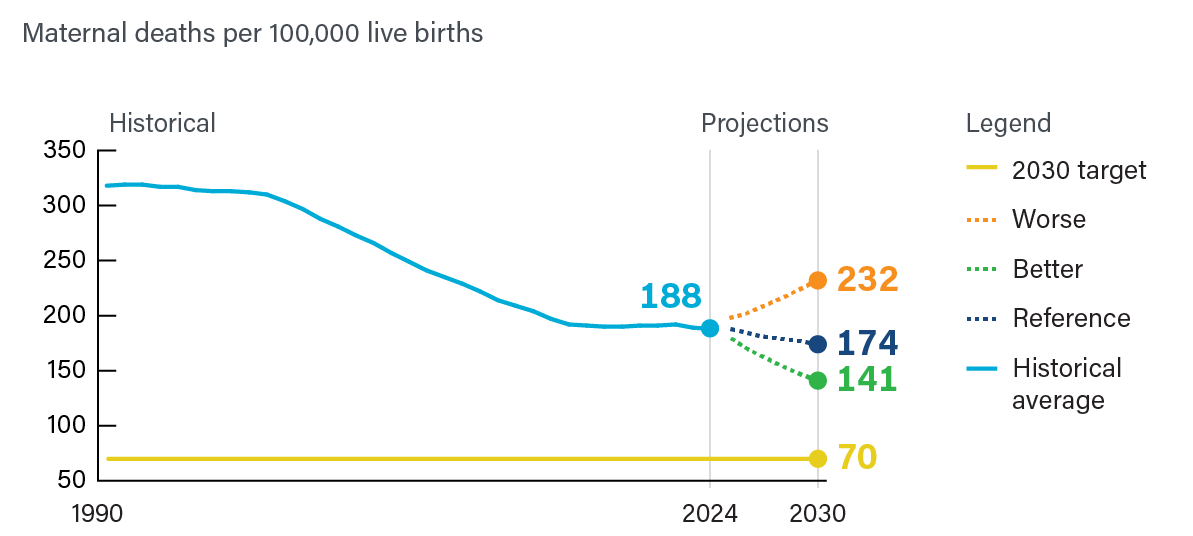
Key missing tools
To advance women's health, new tools are needed, including:
- New contraceptive innovations, including those that are longer-acting, on demand, hormone-free, and have fewer side effects, as well as male contraceptives to reduce the burden on women.
- Additional multipurpose prevention technologies that simultaneously prevent HIV and STIs and unintended pregnancy.
- Better treatments and prevention options for pregnant and lactating women and individuals across a range of health areas.
- Affordable, fit-for-purpose interventions suitable for low-resource settings to address the leading causes of adverse maternal health outcomes, including PPH, preeclampsia, and preterm labor. This includes more affordable, rapid, point-of-care biomarker tests; more accessible drugs for preeclampsia; and easier-to-administer drug formulations of oxytocin as a first-line medicine for PPH.
- More effective treatments and diagnostics for leading gynecological and life-stage conditions, such as endometriosis, uterine fibroids, polycystic ovary syndrome, and menopause.
- Improved diagnostic tests for STIs and other reproductive tract infections, including affordable point-of-care and self-testing products and multiplex diagnostics to test for multiple infections at once.
- Vaccines and other prevention interventions for infectious diseases that disproportionately impact women and for maternal immunization.
- Improved screening, diagnostic, and early-detection tools for women's cancers, such as low-cost, true point-of-care HPV tests and low-cost portable and AI-enabled breast ultrasound technologies to aid diagnosis of breast cancer in community settings.
- Expanded research into and solutions to address the role of the vaginal microbiome and micronutrient deficiency in illness and adverse maternal health outcomes.
Breakthroughs on the brink
- Innovative contraceptive technologies that are longer-lasting, more discreet, and have fewer side effects, including a formerly USAID-supported biodegradable implant that dissolves in the body over time; an NIH-backed multipurpose vaginal ring that slowly releases drugs to prevent HIV infection and pregnancy; microneedle patches that can be briefly, painlessly pressed to the skin to release hormones slowly over time; and an NIH-backed nonhormonal vaginal gel.
- New tools to improve and speed up preeclampsia diagnosis, which is critical to ensure early identification and adequate care, including a rapid, point-of-care biomarker test and AI-powered screening tools.
- New drugs to improve treatment of a variety of women's health challenges, including a formerly USAID-backed heat-stable, inhalable powder formulation of the drug oxytocin used to manage and treat PPH; a once-daily oral drug to prevent preeclampsia; and a self-administered vaginal insert to address persistent HPV infection.
- Antimalarial drug options for use in the first trimester of pregnancy are now being evaluated in a historic Phase 3 trial, addressing the long-standing gap in safe treatments for this population that was fueled by the historic exclusion of pregnant women from clinical research.
- Improved clinical data on how pregnant and postpartum women process anti-HIV and -tuberculosis drugs stemming from an NIH-backed trial, which could inform improved treatment guidelines. Currently, there is a lack of adequate safety and dosing information on the use of these drugs in pregnant and postpartum women.
- Innovative diagnostics for STIs that pose serious health risks for women, including a rapid, portable, point-of-care test for chlamydia and gonorrhea supported by NIH and BARDA and a point-of-care test that can simultaneously detect chlamydia, gonorrhea, and trichomoniasis.
US government investment in R&D for unmet women's health needs, 2024 US$ millions
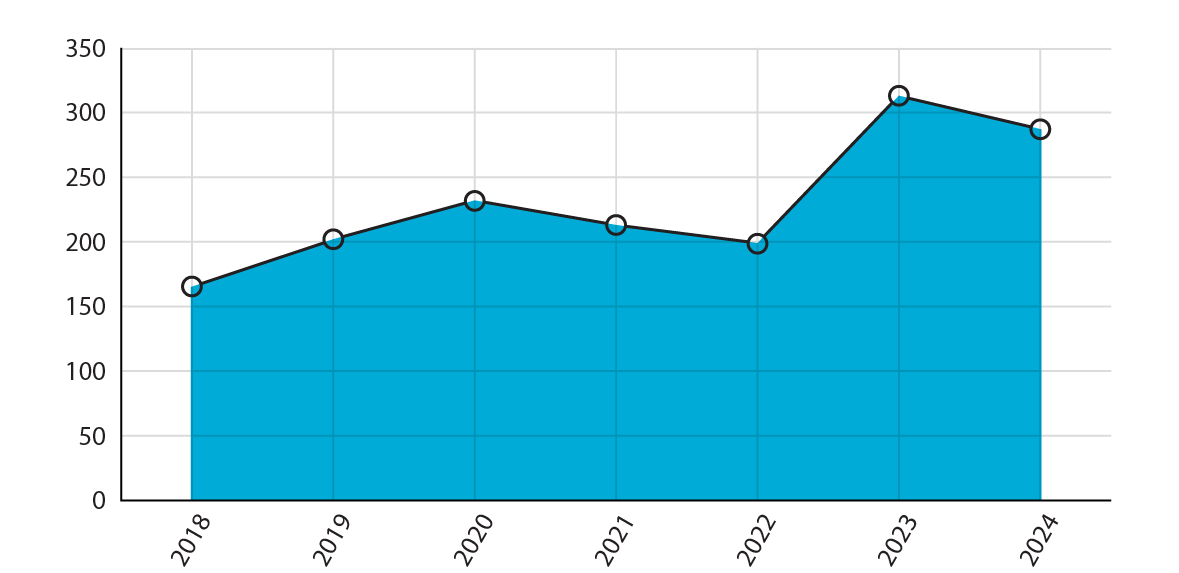
US government R&D efforts
The US government is advancing research and development (R&D) to improve women's health through a whole-of-government approach:
- National Institutes of Health (NIH) conducts R&D to develop and implement tools to improve women's health, as well as furthers policies and practices to advance the inclusion of women and recognition of sex as a biological variable throughout the research process.
- Department of State supports the delivery and scale-up of maternal and reproductive health interventions and HIV products for at-risk women. With the integration of the US Agency for International Development (USAID), the State Department has the opportunity to support R&D efforts for new contraceptives, multipurpose prevention tools, women-centered HIV prevention technologies, and other maternal health interventions previously led by USAID that have been ended.
- Advanced Research Projects Agency for Health supports both early- and late-stage biomedical research responding to critical unmet women's health challenges, including the development of innovative diagnostics, therapeutics, digital tools, and devices, as well as sex-specific research models to improve future research.
- Department of War advances the development of multi-disease platform technologies and products to treat and prevent STIs impacting service members, which can have relevance for women's health.
- Biomedical Advanced Research and Development Authority (BARDA) advances the development of new antibiotics and other tools to address antimicrobial resistance, which can have relevance for STIs and other reproductive tract infections affecting women.
- Centers for Disease Control and Prevention conducts surveillance and epidemiological research to inform the use of existing tools and interventions; operates global immunization programs of relevance to women's health; and provides technical assistance to country partners to strengthen public health capacity.
- Food and Drug Administration, alongside approving products for use in the United States, administers the Tropical Disease Priority Review Voucher Program to incentivize investment in products for certain neglected diseases, and implements an expedited approval pathway for antibiotics, both relevant to women's health.
Introduction
General: Innovation Equity Forum. Women's Health Innovation Opportunity Map 2023. Bill & Melinda Gates Foundation and US National Institutes of Health; 2023. https://womenshealthinnovation.org/wp-content/uploads/2025/09/Womens-Health-RD-Opportunity-Map-2023-1.pdf
260 million pregnancy and childbirth related deaths, 35 times higher: World Health Organization. Maternal mortality. Accessed February 25, 2026. https://www.who.int/news-room/fact-sheets/detail/maternal-mortality
25% more years women spend in poor health than men: Ellingrud K, Pérez L, Petersen A, Sartori V. Closing the women's health gap: A $1 trillion opportunity to improve lives and economies. McKinsey Health Institute. January 17, 2024. Accessed February 25, 2026. https://www.mckinsey.com/mhi/our-insights/closing-the-womens-health-gap-a-1-trillion-dollar-opportunity-to-improve-lives-and-economies
$1 trillion in annual economic growth: Perez L. Ushering in a new era of investment for the health of women. World Economic Forum. January 17, 2024. Accessed April 14, 2026. https://www.weforum.org/stories/2024/01/ushering-in-a-new-era-of-investment-for-the-health-of-women/
Research successes
Contraceptive innovations, overall: World Health Organization. Family planning/contraception methods. July 3, 2025. Accessed February 25, 2026. https://www.who.int/news-room/fact-sheets/detail/family-planning-contraception
Contraceptive innovations, vaginal rings: Cleveland Clinic. Vaginal ring. Updated September 14, 2022. Accessed February 25, 2026. https://my.clevelandclinic.org/health/articles/24157-vaginal-ring
Discreet, self-injectable, long-acting contraception: PATH. The power to prevent pregnancy in women's hands: DMPA-SC injectable contraception. PATH. September 12, 2018. Accessed February 25, 2026. https://www.path.org/our-impact/articles/dmpa-sc/
Expanded HIV prevention options, vaginal ring: Population Council. The dapivirine vaginal ring for HIV prevention. Accessed February 25, 2026. https://popcouncil.org/project/the-dapivirine-vaginal-ring-for-hiv-prevention/
Expanded HIV prevention options, long-acting injectables:
WHO recommends long-acting cabotegravir for HIV prevention. News release. World Health Organization (WHO); July 28, 2022. https://www.who.int/news/item/28-07-2022-who-recommends-long-acting-cabotegravir-for-hiv-prevention
WHO recommends injectable lenacapavir for HIV prevention. Press release. World Health Organization (WHO); July 14, 2025. https://www.who.int/news/item/14-07-2025-who-recommends-injectable-lenacapavir-for-hiv-prevention
Postpartum hemorrhage interventions, uterine balloon tamponades: UNICEF Office of Innovation. Uterine balloon tamponade. Accessed February 25, 2026. https://www.unicef.org/innovation/uterine-balloon-tamponade
Postpartum hemorrhage interventions, compression garment: UNICEF Office of Innovation. Non-pneumatic anti-shock garment. Accessed February 25, 2026. https://www.unicef.org/innovation/non-pneumatic-anti-shock-garment-nasg
Postpartum hemorrhage interventions, calibrated drape: Gates Foundation. This simple tool is helping prevent maternal deaths worldwide. Gates Foundation. June 12, 2025. Accessed February 25, 2026. https://www.gatesfoundation.org/ideas/articles/pph-drape-early-detection
New and repurposed drugs for common sexually transmitted infections, general: From Discovery to Approval: Mapping the Global Health R&D Pipeline. Impact Global Health; 2026. Accessed February 25, 2026. https://www.impactglobalhealth.org/data/sexually-transmitted-infections-pipeline
New and repurposed drugs for common sexually transmitted infections, gonorrhea antibiotics: Howard J. FDA approves first new antibiotics to treat gonorrhea in decades, with hope to combat drug resistance. CNN. December 12, 2025. Accessed February 19, 2026. https://www.cnn.com/2025/12/12/health/new-gonorrhea-treatments-wellness
HPV vaccine, 1 million deaths prevented: Cervical cancer vaccines save over 1 million lives in lower-income countries. Press release. Gavi, the Vaccine Alliance; November 17, 2025. https://www.gavi.org/news/media-room/cervical-cancer-vaccines-save-over-1-million-lives-lower-income-countries
Diagnostic innovations for HIV: Boskey E. What tests can diagnose HIV? Very Well Health. Updated December 18, 2025. Accessed February 25, 2026. https://www.verywellhealth.com/hiv-diagnosis-3132731
Diagnostic innovations for STIs: Adamson PC, Loeffelholz MJ, Klausner JD. Point-of-care testing for sexually transmitted infections: a review of recent developments. Archives of Pathology & Laboratory Medicine. 2020;144(11):1344-1351. https://doi.org/10.5858/arpa.2020-0118-RA
Diagnostic innovations, dual HIV/syphilis rapid test: World Health Organization Global Sexually Transmitted Infections Programme. Dual HIV/Syphilis rapid diagnostic tests. Accessed April 14, 2026. https://www.who.int/teams/global-hiv-hepatitis-and-stis-programmes/stis/testing-diagnostics/dual-hiv-syphilis-rapid-diagnostic-tests
Diagnostic innovations for STIs, multiplex tests: World Health Organization (WHO). WHO prequalifies the first triple diagnostic test. World Health Organization Prequalification of Medical Products. July 11, 2025. Accessed April 14, 2026. https://extranet.who.int/prequal/news/who-prequalifies-first-triple-diagnostic-test
Continued progress is possible, not inevitable
Gates Foundation. Goalkeepers 2025 Report. We can't stop at almost. Gates Foundation; 2025. https://www.gatesfoundation.org/goalkeepers/report/2025-report/
Key missing tools
Innovation Equity Forum. Women's Health Innovation Opportunity Map 2023. Bill & Melinda Gates Foundation and US National Institutes of Health; 2023. https://womenshealthinnovation.org/wp-content/uploads/2025/09/Womens-Health-RD-Opportunity-Map-2023-1.pdf
Improved screening, diagnostic, and early-detection tools:
Rockall AG, Chiu SMY, Aboagye EO, et al. Artificial intelligence in women's cancers: innovation and challenges in clinical translation. The Lancet Digital Health. 2025;7(10):100940. doi:10.1016/j.landig.2025.100940
Salama DH, Allen B, Frija G, et al. From struggle to strength: transforming breast cancer screening for women in low- and middle-income countries. British Journal of Radiology. 2026;99(1180):603-608. https://doi.org/10.1093/bjr/tqag033
US government investment in unmet women's health needs
G-FINDER data portal. Policy Cures Research; 2026. Accessed February 2, 2026. https://gfinderdata.policycuresresearch.org/
Breakthroughs on the brink
Innovative contraceptive technologies, biodegradable implants: Daré Bioscience and Theramex announce co-development and licensing agreement for a potential biodegradable long-acting contraceptive implant. Press release. Daré Bioscience, Inc.; February 20, 2025. https://www.biospace.com/press-releases/dare-bioscience-and-theramex-announce-co-development-and-licensing-agreement-for-a-potential-biodegradable-long-acting-contraceptive-implant
Innovative contraceptive technologies, biodegradable implant: CONRAD. Microbicide Research and Development to Advance HIV Prevention Technologies through Responsive Innovation and Excellence: MATRIX. Accessed April 14, 2026. https://www.conrad.org/matrix
Innovative contraceptive technologies, vaginal ring: Population Council. The dapivirine-levonorgestrel vaginal ring for HIV prevention and contraception. Accessed February 25, 2026. https://popcouncil.org/project/the-dapivirine-levonorgestrel-vaginal-ring-for-hiv-prevention-and-contraception/
Innovative contraceptive technologies, microneedle patches: Chen K, Sun X, Liu Y, Li S, Meng D. Advances in clinical applications of microneedle. Frontiers in Pharmacology. 2025;16:1607210. doi:10.3389/fphar.2025.1607210
Innovative contraceptive technologies, nonhormonal vaginal gel: FIH lead-in study of YASO GEL followed by a Phase 1 randomized, double-blind study to assess safety and pharmacokinetics of YASO GEL (PPCM-01). ClinicalTrials.gov identifier: NCT07281404. Accessed February 25, 2026. https://clinicaltrials.gov/study/NCT07281404#collaborators-and-investigators
Preeclampsia diagnosis, rapid, point-of-care test: Staff reporter. Monod Bio secures $750,000 Gates Foundation grant for preeclampsia test. 360Dx. October 16, 2025. Accessed February 25, 2026. https://www.360dx.com/point-care-testing/monod-bio-secures-750000-gates-foundation-grant-preeclampsia-test
Preeclampsia diagnosis, AI-powered screening tools:
Alipova G, Ablakimova N, Tussupkaliyeva K, et al. Prevention of pre-eclampsia: modern strategies and the role of early screening. Journal of Clinical Medicine. 2025;14(9):2970. doi:10.3390/jcm14092970
Butler L, Gunturkun F, Chinthala L, et al. AI-based preeclampsia detection and prediction with electrocardiogram data. Frontiers in Cardiovascular Medicine. 2024;11:1360238. doi:10.3389/fcvm.2024.1360238
New drugs, inhalable drug for postpartum hemorrhage: Monash University. Inhaled oxytocin project. Accessed February 25, 2026. https://www.monash.edu/research/inhaled-oxytocin-project
New drugs, once-daily oral drug to prevent preeclampsia: Quayium A. Two breakthrough studies show a hydrogen sulfide drug prevents preeclampsia. MirZyme blog. May 14, 2023. Accessed February 25, 2026. https://www.mirzyme.com/post/chemically-engineered-aspirin-mze786-prevents-preeclampsia-in-two-separate-studies
New drugs, self-administered vaginal insert to address persistent HPV infection: Daré Bioscience announces FDA clearance of IND for Phase 2 clinical study of DARE-HPV, a potential treatment for persistent high-risk HPV infection, the most common cause of cervical cancer. Press release. Daré Bioscience, Inc.; February 23, 2026. https://ir.darebioscience.com/news-releases/news-release-details/dare-bioscience-announces-fda-clearance-ind-phase-2-clinical
Antimalarial drug trial: First patient enrolled in historic Phase 3 clinical trial to treat malaria in first-trimester pregnancy. Press release. Medicines for Malaria Venture; October 6, 2025. https://www.mmv.org/SAFIREtrial
Trial for anti-HIV and tuberculosis drugs:
Johns Hopkins University Baltimore-India Clinical Trials Unit. P2026: Pharmacokinetic properties of antiretroviral and anti-tuberculosis drugs during pregnancy and postpartum. Accessed February 25, 2026. http://jhubi-ctu.jhu.edu/research/clinical-trials/p2026-pharmacokinetic-properties-of-antiretroviral-and-anti-tuberculosis-drugs-during-pregnancy-and/
Pharmacokinetic properties of antiretroviral and anti-tuberculosis drugs during pregnancy and postpartum. ClinicalTrials.gov identifier: NCT04518228. Accessed February 25, 2026. https://clinicaltrials.gov/study/NCT04518228#study-overview
Innovative diagnostics, chlamydia and gonorrhea: Johnson M. Scout Health accelerates point-of-care STI test development with $6M CARB-X award. 360Dx. December 3, 2025. Accessed February 25, 2026. https://www.360dx.com/molecular-diagnostics/scout-health-accelerates-point-care-sti-test-development-6m-carb-x-award
Innovative diagnostics, chlamydia, gonorrhea, and trichomoniasis: Aptitude secures $10M+ to accelerate development of point-of-care and over-the-counter CT/NG/TV STI test on Metrix® platform. Press release. Aptitude Medical Systems, Inc.; January 6, 2025. https://www.prnewswire.com/news-releases/aptitude-secures-10m-to-accelerate-development-of-point-of-care-and-over-the-counter-ctngtv-sti-test-on-metrix-platform-302342149.html
US government R&D efforts
US National Institutes of Health Office of Research on Women's Health. Accessed February 25, 2026. https://orwh.od.nih.gov/
KFF. The US government and International Family Planning & Reproductive Health Efforts. KFF; January 2, 2024. https://www.kff.org/global-health-policy/fact-sheet/the-u-s-government-and-international-family-planning-reproductive-health-efforts/
KFF. The US government and Global Maternal and Child Health Efforts. KFF; September 29, 2022. https://www.kff.org/global-health-policy/fact-sheet/the-u-s-government-and-global-maternal-and-child-health/
Biomedical Advanced Research and Development Authority. CBRN Antimicrobials Medical Countermeasures Program. Accessed March 3, 2026. https://medicalcountermeasures.gov/barda/cbrn/antimicrobials
Share America. New US health assistance boosts self-reliance. Share America. January 13, 2026. Accessed March 3, 2026. https://share.america.gov/new-us-health-assistance-model-boosts-self-reliance
R&D for Antimicrobial Resistance
How new tools can transform the fight
Antimicrobial resistance (AMR) occurs when microbes evolve to no longer respond to treatment. The World Health Organization considers it one of the top global health threats, given it puts the gains of modern medicine at risk and threatens progress against some of the world’s deadliest diseases. In recent years, governments have increased action to reinvigorate the antimicrobial research pipeline and tackle major drivers of AMR, such as antimicrobial misuse and overuse, but much work remains to be done. The current clinical pipeline for products to address priority pathogens is insufficient, and growing resistance to antibiotics, antivirals, antifungals, and antiparasitic drugs is steadily reducing our arsenal of treatments for common threats. To confront this crisis, we need new antimicrobials and antimicrobial alternatives, as well as new diagnostics and vaccines to improve surveillance and prevention.
-
5 milliondeaths associated with AMR every year
-
$100 trillionprojected cost of AMR to global economy from 2014 to 2050
-
1 in 5cancer patients in treatment are hospitalized due to an infection
Research successes
New technologies are aiding the fight against AMR:
- Two first-in-class new oral antibiotics to treat gonorrhea, zoliflodacin and gepotidacin, were approved by the FDA in 2025, becoming the first new treatments approved in decades. The former was developed with support from NIH and the latter from BARDA and DoW.
- Cefiderocol and sulbactam-durlobactam were approved by the FDA in 2020 and 2023, respectively, as new antibiotics for hospital-acquired and ventilator-associated bacterial pneumonia, providing additional treatment options for bacterial strains prone to resistance.
- Several new antibiotics—including pivmecillinam, vaborbactam, plazomicin, cefiderocol, sulopenem etzadroxil and probenecid, and cefepime/enmetazobactam—have been approved by the FDA in recent years to treat urinary tract infections, providing new options for those with infections unresponsive to existing drugs.
- Pretomanid, a new drug for highly drug-resistant tuberculosis (TB), developed with USAID and NIH support, was approved by the FDA in 2019 as part of a combination regimen that has dramatically improved treatment outcomes and reduced treatment times.
- Pneumococcal vaccines for children, first introduced in the 2000s, have saved millions of lives while also reducing the use of antibiotics. Universal coverage of these vaccines could prevent 11.4 million days of antibiotic use per year in children under five.
- New tests that identify whether infections are resistant to certain treatments have been introduced, including a BARDA-supported panel test that detects 13 resistance genes and rapid, automated molecular tests for drug-resistant TB.
Deaths from drug-resistant infections set to skyrocket
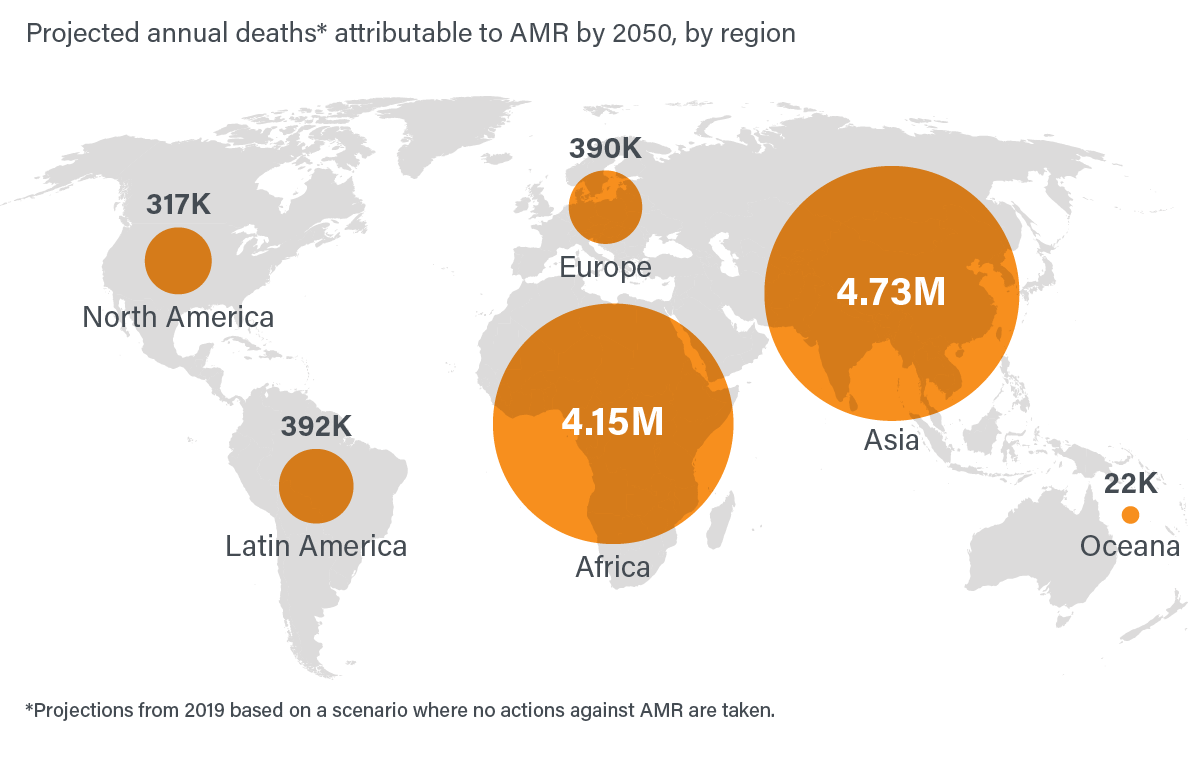
Key missing tools
To control AMR, we need innovative tools to prevent, diagnose, and treat drug-resistant infections, including:
- Novel antimicrobials to treat priority pathogens.
- Expanded antimicrobial options designed for children and infants.
- Oral formulations of existing and investigational antimicrobials, which are easier to administer in outpatient settings and can improve treatment adherence to prevent the emergence of further resistance.
- Rapid, point-of-care diagnostic tests that identify infections and determine whether they are resistant, helping ensure appropriate treatment and prevent the misuse or overuse of existing antimicrobials.
- Vaccines and other prevention options to avert infections in the first place.
- Alternatives to antimicrobials, such as bacteria-targeting viruses called bacteriophages, anti-virulence therapies, and innovative approaches to manipulate the gut microbiome.
Breakthroughs on the brink
- VE303, a new oral preventative for recurrent Clostridioides difficile infection, a potentially life-threatening bacterial infection that causes diarrhea and colon inflammation, which is undergoing Phase 3 trials with support from BARDA.
- Cefepime-taniborbactam, a new antibiotic developed for treating complicated urinary tract infections in adults, which completed Phase 3 trials. A pediatric formulation is also being advanced for children and newborns.
- A protective vaccine against typhoid fever and invasive nontyphoidal Salmonellosis, a disease caused by salmonella subspecies found almost exclusively in sub-Saharan Africa—advanced with BARDA and NIH support and now in Phase 2 development—could help address the estimated 70,000 deaths from the disease and 20,000 deaths from Salmonella enterica serovar Typhi annually in the region.
- Maternal vaccines targeting Klebsiella pneumoniae and Escherichia coli (E. coli), the leading causes of neonatal sepsis and major contributors to infant mortality, particularly in low- and middle-income countries. These vaccines rely on well-established technology platforms, are expected to have low manufacturing costs, and would be administered during pregnancy, enabling the transfer of protective antibodies to infants both in utero and through breastfeeding.
- Dosing validation of three existing antibiotics (fosfomycin, flomoxef, and amikacin) in newborns to expand treatment options for neonatal sepsis. Forty percent of infections causing neonatal sepsis in hospitals are resistant to standard treatments.
- Oral and intravenous formulations of an innovative broad-spectrum small-molecule antibiotic, BWC0977, in clinical development that has the potential to treat a variety of drug-resistant gram-positive and gram-negative bacterial infections, including pneumonia, bloodstream infections, and complicated urinary tract infections. It is being developed with support from BARDA and NIH.
- A vaccine to prevent enterotoxigenic E. coli, a major global cause of diarrheal disease and death in children, which showed promise in Phase 2 trials and could reduce the need for antibiotic treatment and curb the emergence of AMR.
- An at-home, rapid test to diagnose common sexually transmitted infections and detect gonorrhea resistance to ciprofloxacin, a former frontline oral antibiotic. The test, being advanced with BARDA and NIH support, will enable doctors to treat patients with oral ciprofloxacin when appropriate while reserving injectable ceftriaxone as a vital last-line therapy.
- A first-of-its-kind infectious disease diagnostic platform, advanced with BARDA and NIH support, that rapidly identifies the pathogen causing an infection and profiles its antibiotic susceptibility in hours, rather than the days typically required for culture-based tests, the current standard.
- Phage therapy, a promising alternative to antibiotics that uses bacteriophages, viruses that infect and kill bacteria. SNIPR001 is a first-in-class, CRISPR-enhanced phage cocktail targeting gut E. coli to reduce bloodstream infections in high-risk cancer patients without harming the microbiome. Supported by BARDA and NIH, it is in clinical development and received FDA Fast Track designation.
US government R&D efforts
The US government is leading efforts to advance research and development (R&D) to combat AMR through a whole-of-government approach:
- Biomedical Advanced Research and Development Authority (BARDA) supports early-stage and advanced development of antimicrobials and other products through direct R&D investments and financial support of the global Combating Antibiotic-Resistant Bacteria Biopharmaceutical Accelerator (CARB-X) nonprofit partnership.
- National Institutes of Health (NIH) conducts basic and clinical research to advance new antimicrobials and other technologies to combat AMR and provides in-kind assistance to CARB-X.
- Advanced Research Projects Agency for Health supports high-risk, high-reward AMR R&D by advancing transformative platforms for rapid antibiotic discovery, resistance detection, and precision treatment, including using AI-enabled approaches.
- Centers for Disease Control and Prevention (CDC) develops diagnostic tools, operates an AMR isolate bank to provide samples to product developers, and supports domestic and global surveillance and stewardship activities, including operating a global laboratory and response network.
- Department of War (DoW) supports global surveillance activities through its overseas laboratories and supports the development of select antimicrobials to combat sepsis and the threat of drug resistance in combat wounds.
- Department of State advances select R&D efforts for drug-resistant TB, following the integration of the US Agency for International Development (USAID), and helps scale up and deliver tools for other select global threats impacted by rising drug resistance, including malaria and HIV/AIDS.
- Food and Drug Administration (FDA), alongside approving products for use in the United States, cooperates the AMR isolate bank with CDC, provides guidance to product developers, and implements an expedited approval pathway for antibiotics.
Introduction
Antimicrobial resistance: World Health Organization. Antimicrobial resistance. Updated November 21, 2023. Accessed February 19, 2026. https://www.who.int/news-room/fact-sheets/detail/antimicrobial-resistance
5 million deaths: Institute for Health Metrics and Evaluation. Antimicrobial resistance (AMR). Accessed February 19, 2026. https://www.healthdata.org/research-analysis/health-risks-issues/antimicrobial-resistance-amr
$100 trillion lost: King A, Chemistry World. Antibiotic resistance will kill 300 million people by 2050. Scientific American. December 16, 2014. Accessed February 19, 2026. https://www.scientificamerican.com/article/antibiotic-resistance-will-kill-300-million-people-by-2050/
1 in 5 cancer patients: Union for International Cancer Control. AMR and cancer series. Accessed February 19, 2026. https://www.uicc.org/what-we-do/sharing-knowledge/virtual-dialogues/amr-and-cancer-series
Research successes
Antibiotics to treat gonorrhea:
Howard A. FDA approves first new antibiotics to treat gonorrhea in decades, with hope to combat drug resistance. CNN. December 12, 2025. Accessed February 19, 2026. https://www.cnn.com/2025/12/12/health/new-gonorrhea-treatments-wellness
Blujepa (gepotidacin) approved by US FDA as oral option for treatment of uncomplicated urogenital gonorrhea (uGC). Press release. GSK; December 11, 2025. https://us.gsk.com/en-us/media/press-releases/blujepa-gepotidacin-approved-by-us-fda-as-oral-option-for-treatment-of-uncomplicated-urogenital-gonorrhea-ugc/
NUZOLVENCE® (Zoliflodacin), first-in-class oral antibiotic for gonorrhoea, receives US FDA approval. Press release. Global Antibiotic Research & Development Partnership; December 12, 2025. https://gardp.org/nuzolvence-zoliflodacin-first-in-class-oral-antibiotic-for-gonorrhoea-receives-u-s-fda-approval/
Cefiderocol: Shionogi announces FDA approval of FETROJA® (Cefiderocol) for the treatment of hospital-acquired bacterial pneumonia and ventilator-associated bacterial pneumonia. Press release. Shionogi; September 28, 2020. https://www.shionogi.com/us/en/news/2020/9/shionogi-announces-fda-approval-of-fetroja-cefiderocol-for-the-treatment-of-hospital-acquired-bacterial-pneumonia-and-ventilator-associated-bacterial-pneumonia.html
Sulbactam-durlobactam: FDA approves new treatment for pneumonia caused by certain difficult-to-treat bacteria. Press release. US Food and Drug Administration (FDA); May 23, 2023. https://www.fda.gov/news-events/press-announcements/fda-approves-new-treatment-pneumonia-caused-certain-difficult-treat-bacteria
Several new antibiotics for urinary tract infections:
Jacobs A. FDA approves antibiotic for increasingly hard-to-treat urinary tract infections. The New York Times. April 24, 2024. Accessed February 19, 2026. https://www.nytimes.com/2024/04/24/health/fda-urinary-tract-infection-antibiotic.html
World Health Organization. Analysis of Antibacterial Agents in Clinical and Preclinical Development: Overview and Analysis 2025. World Health Organization; 2025. https://www.who.int/publications/i/item/9789240113091
World Health Organization. 2023 Antibacterial Agents in Clinical and Preclinical Development: An Overview and Analysis. World Health Organization; 2024. https://www.who.int/publications/i/item/9789240094000
Pretomanid: FDA approves new treatment for highly drug-resistant forms of tuberculosis. Press release. TB Alliance; August 14, 2019. https://www.tballiance.org/news-fda-approves-new-treatment-highly-drug-resistant-forms-tuberculosis/
Pneumococcal vaccines: O'Neill J. Vaccines vs superbugs: A new weapon to fight antibiotic resistance? World Economic Forum. February 12, 2016. Accessed February 19, 2026. https://www.weforum.org/agenda/2016/02/vaccines-vs-superbugs-a-new-weapon-to-fight-antibiotic-resistance/
New tests:
Study demonstrates T2Resistance Panel utilization enables faster targeted therapy based on direct-from-blood detection of resistance genes. Press release. T2 Biosystems; March 18, 2024. https://t2biosystems.gcs-web.com/news-releases/news-release-details/t2-biosystems-announces-new-publication-highlighting-clinical
Nandlal L, Perumal R, Naidoo K. Rapid molecular assays for the diagnosis of drug-resistant tuberculosis. Infection and Drug Resistance. 2022;15:4971-4984. doi:10.2147/IDR.S381643
AMR could cause 10 million deaths by 2050
Fourreau V. Antimicrobial resistance could cause 10 million deaths a year by 2050. Statista. November 18, 2025. Accessed February 19, 2026. https://www.statista.com/chart/35473/projected-deaths-antimicrobial-resistance-amr/
Data drawn from Murray C, Ikuta K, Sharara F, et al. Global burden of bacterial antimicrobial resistance in 2019: a systematic analysis. The Lancet. 2022;399:629-655. doi:10.1016/S0140-6736(21)02724-0
Key missing tools
World Health Organization. Global Research Agenda for Antimicrobial Resistance in Human Health. World Health Organization; 2025. https://www.who.int/publications/i/item/9789240102309
World Health Organization. Antimicrobial resistance. Updated November 21, 2023. Accessed February 19, 2026. https://www.who.int/news-room/fact-sheets/detail/antimicrobial-resistance
Breakthroughs on the brink
VE303: Vedanta Biosciences enrolls first patient in pivotal Phase 3 RESTORATiVE303 study of VE303 for the prevention of recurrent C. difficile infection. Press release. Vedanta Biosciences; May 21, 2024. https://www.vedantabio.com/press-release/vedanta-biosciences-enrolls-first-patient-in-pivotal-phase-3-restorative303-study-of-ve303-for-the-prevention-of-recurrent-c-difficile-infection/
New antibiotic for complicated urinary tract infections: GARDP welcomes positive results in Venatorx Phase 3 clinical trial of new treatment for serious bacterial infections. Press release. Global Antibiotic Research & Development Partnership (GARDP); March 10, 2022. https://gardp.org/gardp-welcomes-positive-results-in-venatorx-phase-3-clinical-trial-of-new-treatment-for-serious-bacterial-infections/
Vaccine to protect against typhoid fever and invasive nontyphoidal salmonellosis:
Combating Antibiotic-Resistant Bacteria Biopharmaceutical Accelerator (CARB-X). CARB-X graduates. Accessed February 19, 2026. https://carb-x.org/portfolio/carb-x-graduates/
A study to evaluate safety, reactogenicity, and immune response of GVGH iNTS-TCV vaccine against invasive nontyphoidal salmonella and typhoid fever. ClinicalTrials.gov identifier: NCT05480800. Accessed February 19, 2026. https://clinicaltrials.gov/study/NCT05480800
Maternal vaccine for sepsis:
CARB-X is funding Syntiron to develop a maternal vaccine to prevent neonatal sepsis. Press release. Combating Antibiotic-Resistant Bacteria Biopharmaceutical Accelerator (CARB-X); January 18, 2024. https://carb-x.org/carb-x-news/carb-x-is-funding-syntiron/
CARB-X funds University of Maryland to develop a vaccine to prevent neonatal sepsis. Press release. Combating Antibiotic-Resistant Bacteria Biopharmaceutical Accelerator (CARB-X); May 21, 2024. https://carb-x.org/carb-x-news/carb-x-funds-university-of-maryland-to-develop-a-vaccine-to-prevent-neonatal-sepsis/
Validation of dosing of three existing antibiotics in newborns:
Global Antibiotic Research & Development Partnership. Neonatal sepsis. Accessed February 19, 2026. https://gardp.org/neonatal-sepsis/
Landmark clinical trial for improving treatment options for newborns with sepsis to include nine countries. Press release. Global Antibiotic Research & Development Partnership; June 12, 2025. https://gardp.org/landmark-clinical-trial-for-improving-treatment-options-for-newborns-with-sepsis-to-include-nine-countries/
BWC0977:
Novel broad-spectrum antibiotic compound prioritized for development in fight against AMR. Press release. Global Antibiotic Research & Development Partnership and Bugworks Research; June 11, 2024. https://gardp.org/novel-broad-spectrum-antibiotic-compound-prioritized-for-development-in-fight-against-amr/
Global Antibiotic Research & Development Partnership. Serious bacterial infections & sepsis. Accessed February 19, 2026. https://gardp.org/serious-bacterial-infections/
Vaccine to prevent enterotoxigenic Escherichia coli: Dale C. Experimental E. coli vaccine shows promise in Phase 2 trial. CIDRAP. February 18, 2026. Accessed February 19, 2026. https://www.cidrap.umn.edu/antimicrobial-stewardship/experimental-e-coli-vaccine-shows-promise-phase-2-trial
Portable, rapid diagnostic test for gonorrhea: CARB-X funds Visby Medical to develop a portable rapid diagnostic for gonorrhea including antibiotic susceptibility. Press release. Combating Antibiotic-Resistant Bacteria Biopharmaceutical Accelerator (CARB-X); February 8, 2024. https://carb-x.org/carb-x-news/carb-x-funds-visby-medical/
First-of-its-kind infectious disease diagnostic platform:
Pattern awarded $22.5M BARDA contract to advance single-cell microbiology system and critical care antimicrobial susceptibility testing panels for pneumonia and bacteremia. Press release. Pattern Bioscience; November 21, 2024. https://pattern.bio/pattern-awarded-22-5-barda-contract-to-advance-single-cell-microbiology-system-and-critical-care-antimicrobial-susceptibility-testing-panels-for-pneumonia-and-bacteremia/
Pattern Bioscience secures $28.7 million in Series C financing. Press release. Pattern Bioscience; April 27, 2023. https://pattern.bio/pattern-bioscience-secures-28-7-million-in-series-c-financing/
Phage therapy:
NIH awards grants to support bacteriophage therapy research. News release. US National Institutes of Health (NIH); March 11, 2021. https://www.nih.gov/news-events/news-releases/nih-awards-grants-support-bacteriophage-therapy-research
US National Institutes of Health. Combat antibiotic resistance through phage therapy research. US National Institutes of Health; November 20, 2024. Accessed February 19, 2026. https://www.niaid.nih.gov/grants-contracts/combat-antibiotic-resistance-through-phage-therapy-research
Combating Antibiotic-Resistant Bacteria Biopharmaceutical Accelerator. SNIPR BIOME. Accessed April 13, 2026. https://carb-x.org/gallery/snipr-biome-aps/
US government R&D efforts
Federal Task Force on Combating Antibiotic-Resistant Bacteria. National Action Plan for Combating Antibiotic-Resistant Bacteria, 2020–2025. US Department of Health and Human Services; 2020. https://aspe.hhs.gov/reports/national-action-plan-combating-antibiotic-resistant-bacteria-2020-2025
Share America. New US health assistance boosts self-reliance. Share America. January 13, 2026. Accessed March 3, 2026. https://share.america.gov/new-us-health-assistance-model-boosts-self-reliance
Advanced Research Projects Agency for Health (ARPA-H). ARPA-H announces award to address the rapidly growing threat of antimicrobial resistance and drive antibiotic discovery to improve health outcomes. ARPA-H, September 27, 2023. Accessed April 13, 2026. https://arpa-h.gov/news-and-events/arpa-h-award-aims-combat-antimicrobial-resistance
Tags:
Fact sheet, US policy